






Quality
Standards & approvals
An overview of the various standards and approvals for elastomers and plastics. In many industries they are essential to ensure the highest standards of quality, safety and functionality.
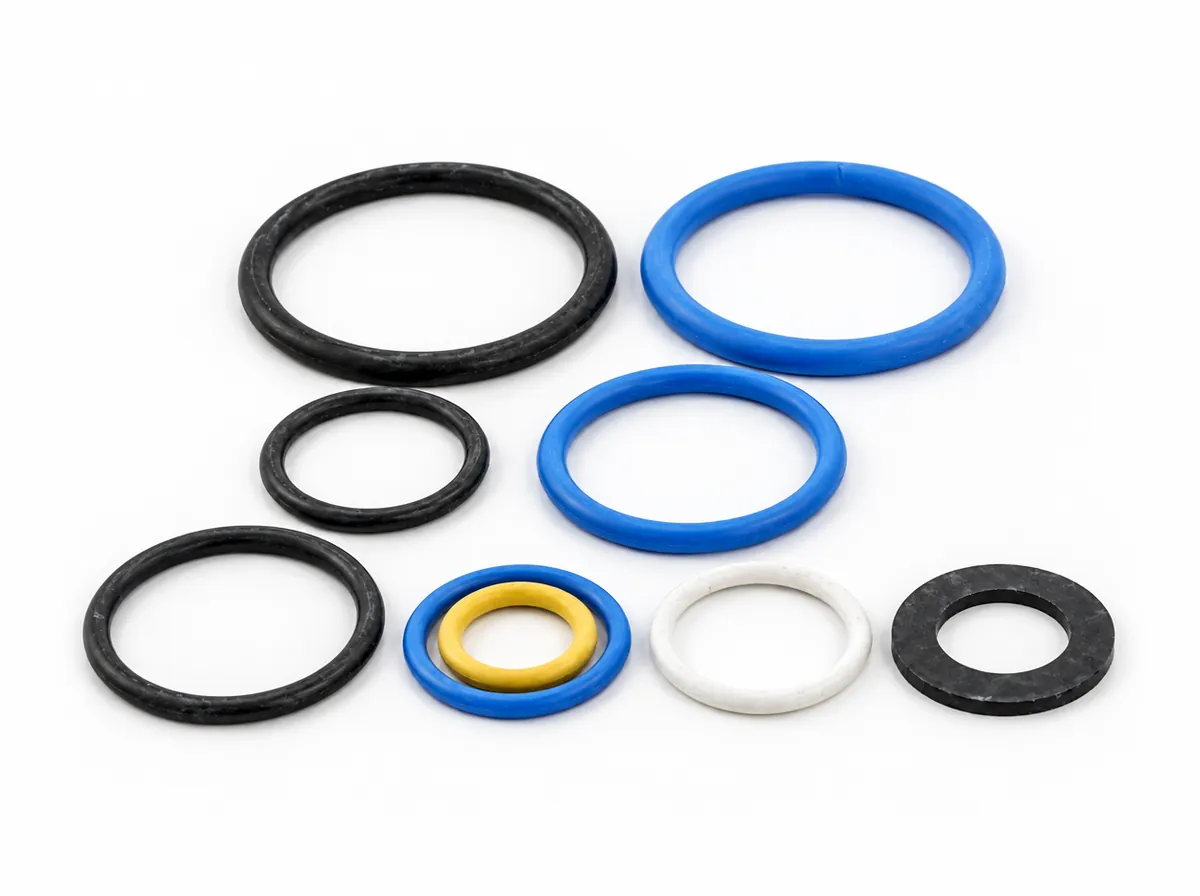
Drinking water
KTW · EN 16421 · DVGW
Food
FDA · BfR · EC 1935/2004
Fire behaviour
UL94
Medical
USP Class VI
Overview
Tested for demanding applications
In many industries, standards and approvals are essential to ensure the highest standards of quality, safety and functionality. For seals and elastomer products, this means they must meet strict tests and requirements in order to work reliably in demanding applications.
On request, we supply our materials with the appropriate approval or conformity. We will be happy to answer any detailed questions.
At a glance
Our standards & approvals
UL94
Underwriters Laboratories, flammability of polymeric materials
The certificate for specific fire protection requirements: UL 94 classifies the flammability of polymeric materials.
KTW-BWGL
Assessment basis for plastics in contact with drinking water · WRAS UK
KTW stands for Kunststoff-Trinkwasser (plastics in drinking water): the German assessment basis for plastics, elastomers, TPE, coatings and lubricants in contact with drinking water.
EU DWD
EU Drinking Water Directive (EU) 2020/2184
The EU DWD (Drinking Water Directive) is the European Union's directive on drinking water, expected to come into force from January 2027. For the first time, it introduces uniform European requirements for materials in contact with drinking water, including elastomer seals.
EN 16421
Influence of materials on drinking water, enhancement of microbial growth (formerly W270)
EN 16421 replaces DVGW worksheet W 270 (DVGW W270) and governs the influence of materials on water intended for human consumption, specifically the enhancement of microbial growth.
EN 681
EN 681 · Elastomeric seals for pipe joints in water supply and drainage
EN 681 sets out the material requirements for elastomeric seals in pipe joints used in water supply and drainage. For drinking water seals, it is the relevant material standard.
ELL
Elastomer Guideline, superseded by KTW-BWGL since 1 July 2026
The ELL (the German Environment Agency's (UBA) Elastomer Guideline) was Germany's authoritative basis for the hygienic assessment of elastomers in contact with drinking water. Since 1 July 2026, assessment has been carried out under the KTW-BWGL.
FDA
U.S. Food and Drug Administration
Suitability of materials and products for use in the food industry.
BfR
German Federal Institute for Risk Assessment (Bundesinstitut für Risikobewertung)
Recommendations on the health assessment of materials for food contact.
DVGW
German Technical and Scientific Association for Gas and Water (Deutscher Verein des Gas- und Wasserfaches)
For products that come into contact with drinking water or with gas-carrying lines and systems.
EN 682
EN 682 · Elastomeric seals for pipes and fittings carrying gas
EN 682 sets out the material requirements for elastomeric seals in pipes and fittings carrying gas and hydrocarbon fluids. It is the relevant material standard for seals in gas and gas-carrying lines.
EC 1935/2004
Regulation on materials intended for food contact
The central legal basis for materials that come into contact with food.
NSF
Food contact according to NSF/ANSI 51
NSF tests and lists materials, components and equipment for food contact.
USP Class VI
United States Pharmacopeia, biocompatibility
For medical and pharmaceutical applications.
Knowledge
Related technical articles
The New KTW-BWGL Has Been in Force Since 1 July 2026
An overview of the key changes
Read moreWhich Materials Are Suitable for Heat-Resistant Flat Seals?
Heat-resistant flat seals are used in a wide range of industries, including chemicals, oil and gas, automotive and heavy industry. They are essential for ensuring the tightness, safety, efficiency and service life of systems operated under extreme thermal loads. But which materials are suitable for such applications? In this article, we look at the properties and possible uses of materials such as graphite, PTFE (polytetrafluoroethylene) and metal-reinforced seals. With this analysis, you can make the best choice of material for your specific requirements.
Read moreDifferences Between Graphite and EPDM Flat Seals
Flat seals play a central role in sealing technology, as they are used in a wide variety of industries and installation situations. Two of the most different materials for flat seals are graphite and EPDM (ethylene propylene diene rubber). Both materials have specific properties that predestine them for different applications. In this article, we look at the chemical, mechanical and thermal differences to help you make an informed decision.
Read moreWhy EPDM Flat Seals Are Suitable for Sanitary Applications
EPDM (ethylene propylene diene monomer) has established itself as an outstanding material for flat seals in sanitary applications. With its combination of chemical resistance, thermal stability and flexibility, it meets the high requirements of this industry. In this article, we examine the technical properties of EPDM and show why it is predestined for use in sanitary installations.
Read moreHow to Find the Right Flat Seal for Your Application
Choosing the right flat seal is crucial for tightness and therefore also for the safety, efficiency and service life of machines, plants and systems. Whether in the chemical industry, mechanical engineering or sanitary technology, the requirements placed on seals vary widely. In this guide, we show you how to find the optimum flat seal for your specific application.
Read moreWhich Standards Must Flat Seals Meet?
Flat seals play a crucial role in many industries, including chemicals, petrochemicals, mechanical engineering and sanitary technology. To ensure safety, durability and performance, these seals must comply with strict norms and standards. In this article, we look at the most important standards, their significance and technical details, so that flat seals meet the requirements of their applications.
Read moreWorking together
Which approval does your application need?
Tell us your industry, medium and required standard, and we will recommend the right material and the right approval.