




Materials
Materials & grades
An overview of our elastomers, foams, plastics and high-pressure sealing materials, plus a summary of temperature ranges and approvals.
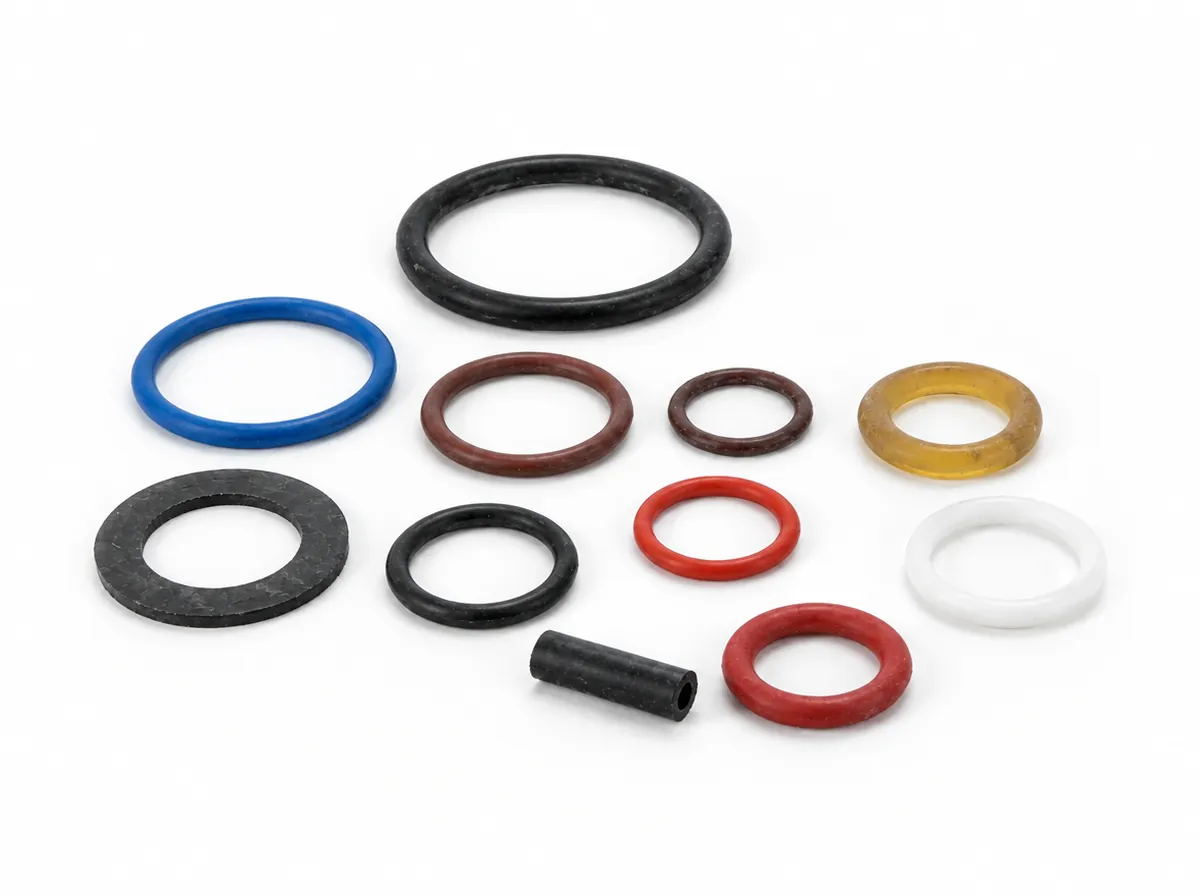
Elastomers
NR · NBR · EPDM · FKM · VMQ
Temperatures
-50 to +320 °C
Approvals
KTW · DVGW · FDA · UL94
Compliant
REACH & RoHS
Overview
The right material for every requirement
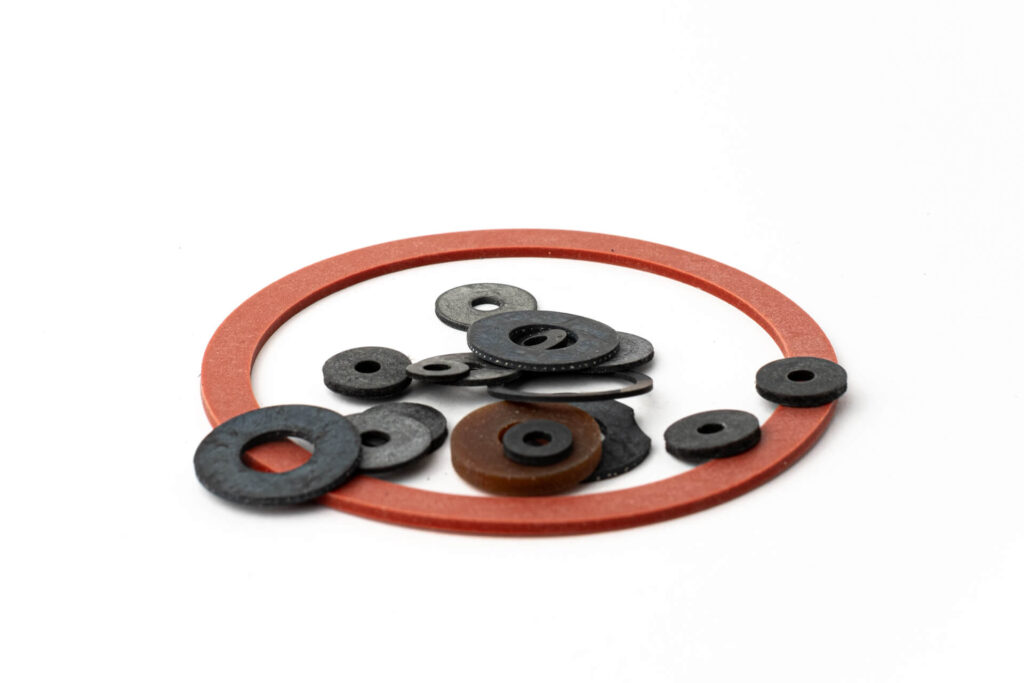
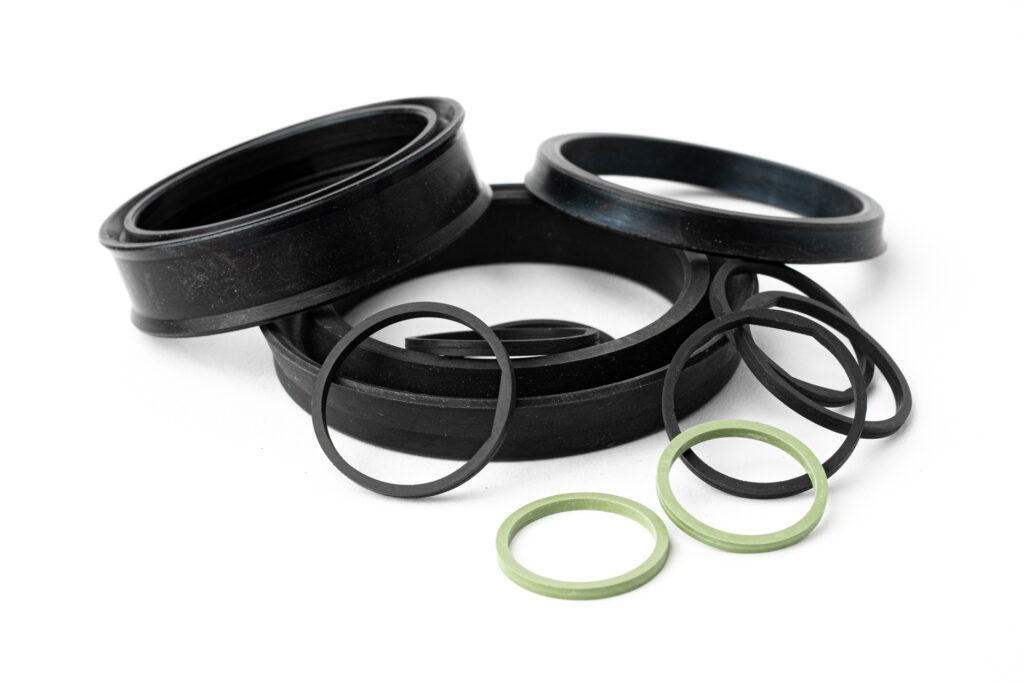
Here you will find an overview of the elastomers, foams, plastics and high-pressure sealing materials we use to manufacture our products. Each material offers specific properties and application benefits to meet the diverse requirements of our customers.
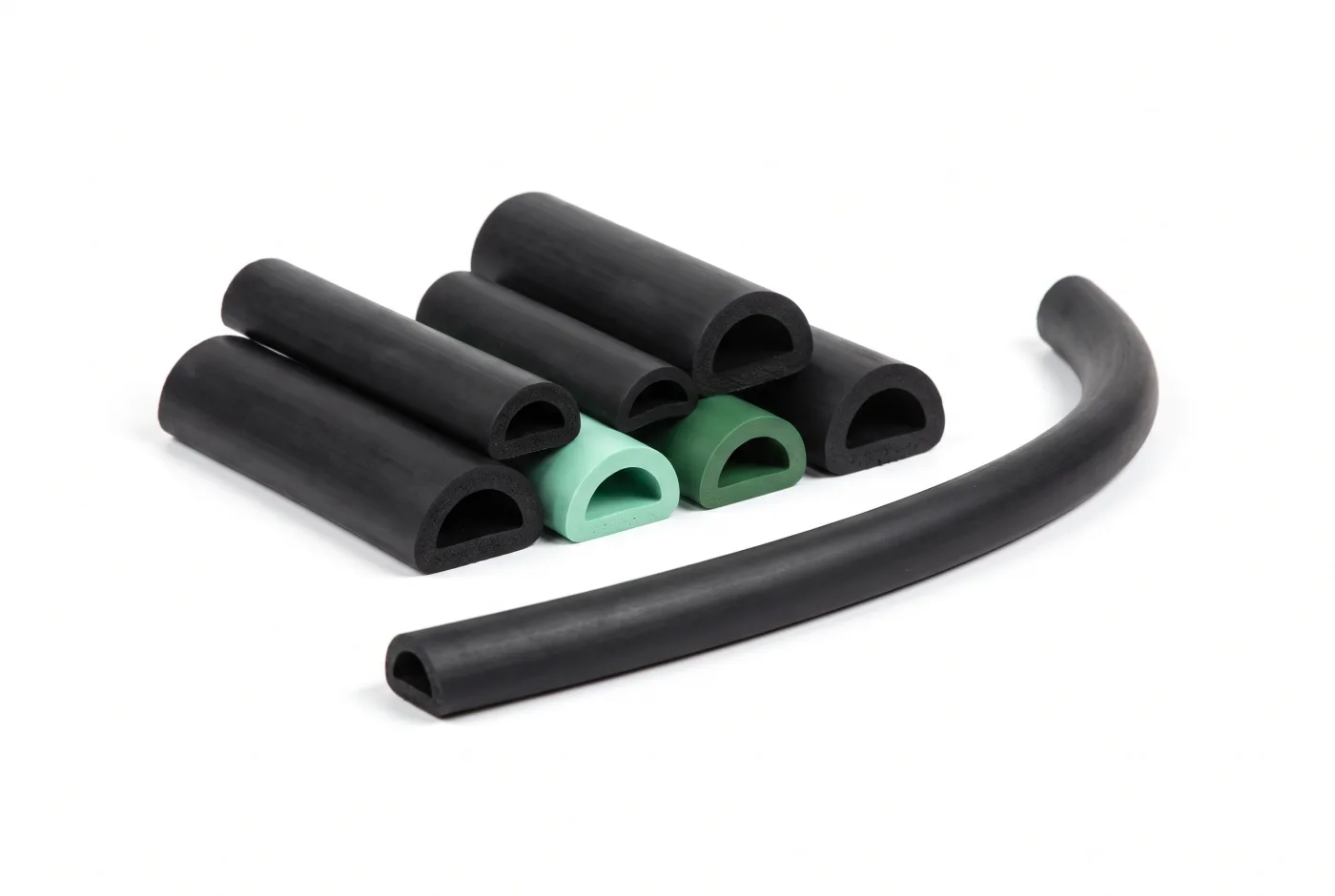
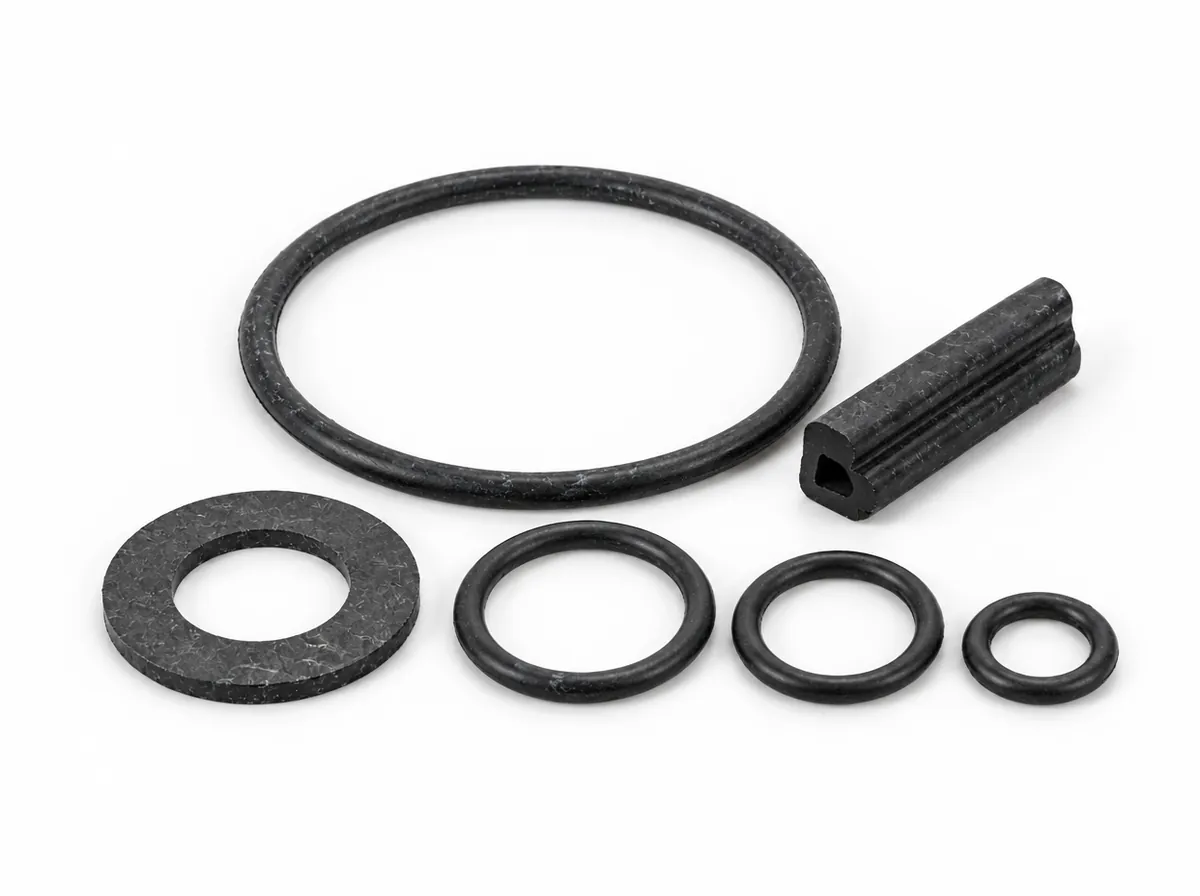
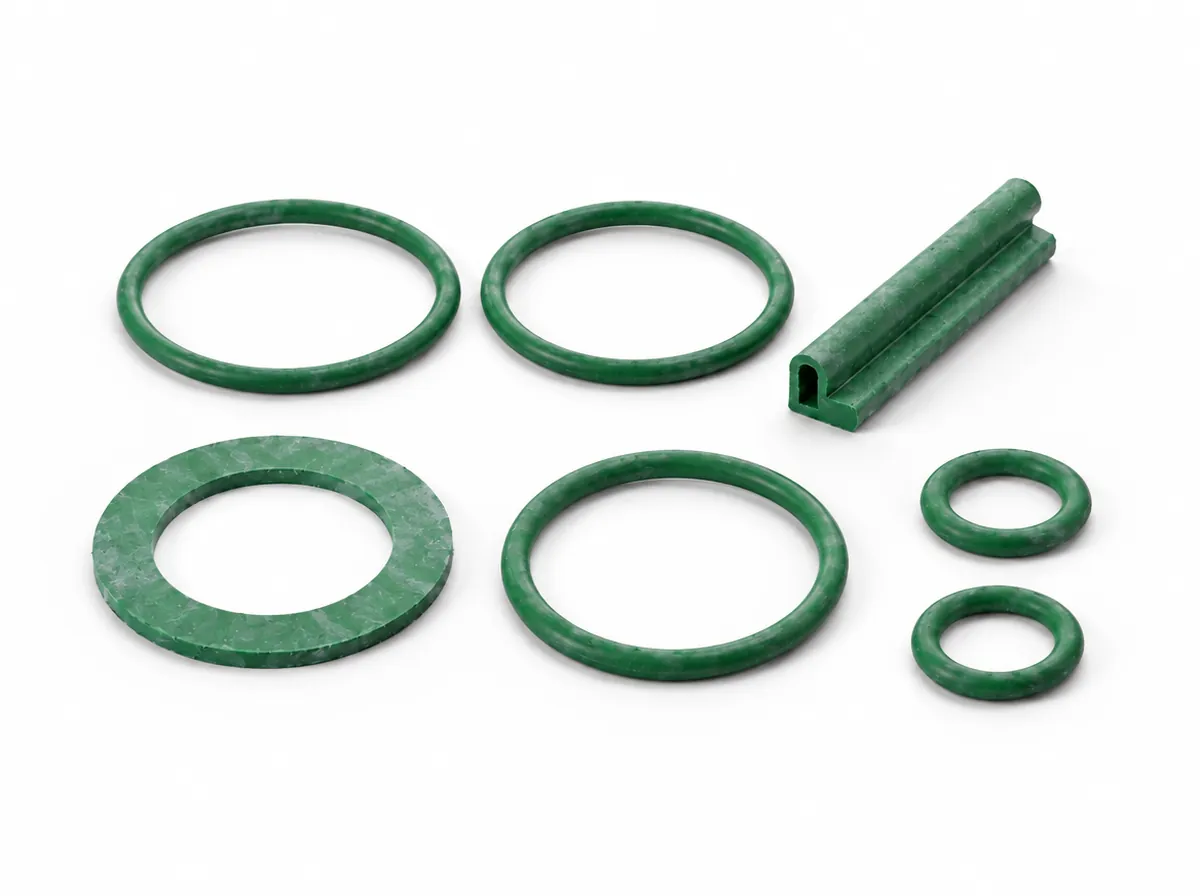
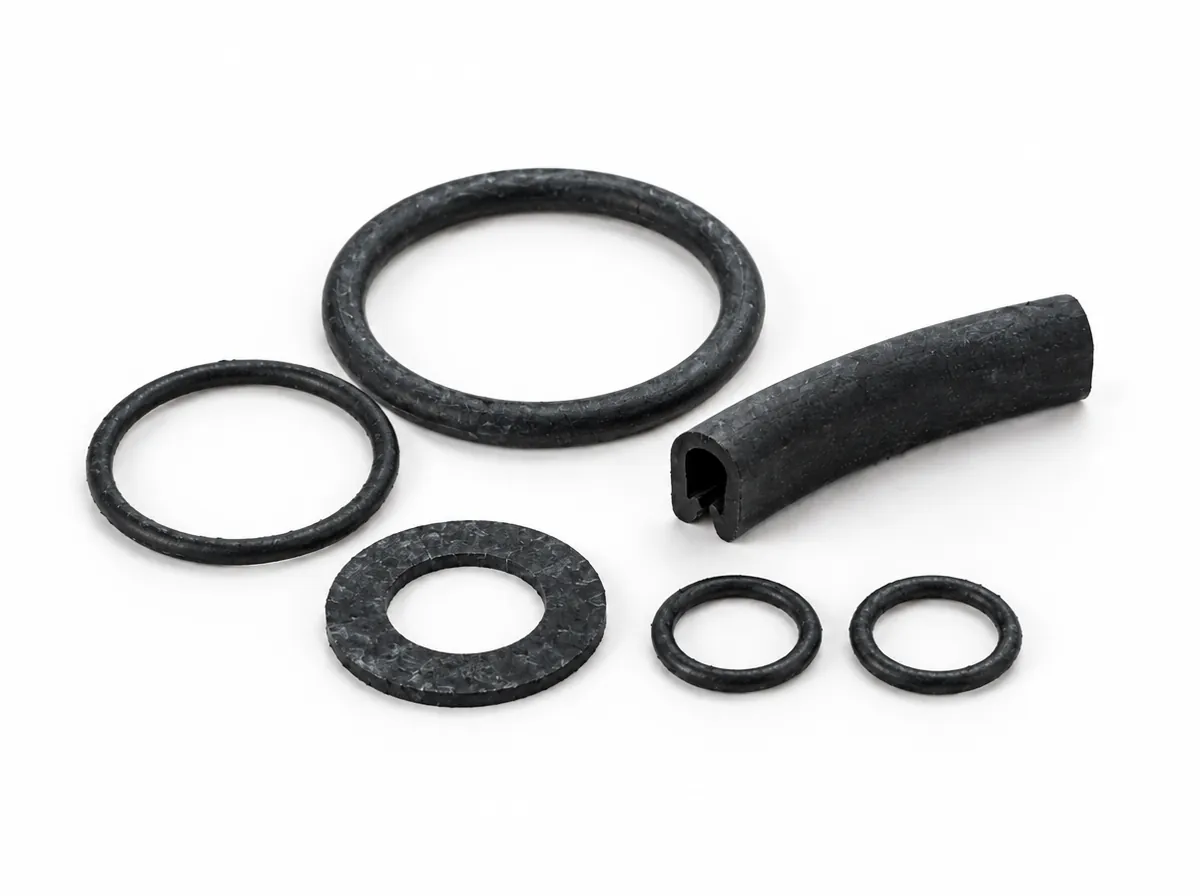
Our range of materials includes elastomers such as NR, SBR, NBR, H-NBR, CR, EPDM, TPE, solid and liquid silicone (LSR) and Viton (FPM, FKM, FFKM), as well as foams such as sponge rubber, cellular rubber and silicone foam, and plastics (thermoplastics) such as rigid and flexible PVC, PA, PC, PE and PP.
The materials offer a wide variety of properties and resistances: good abrasion resistance and elasticity, chemical resistance to a wide range of media, UV, ozone and weather resistance for outdoor use, and broad temperature ranges for the most diverse applications.
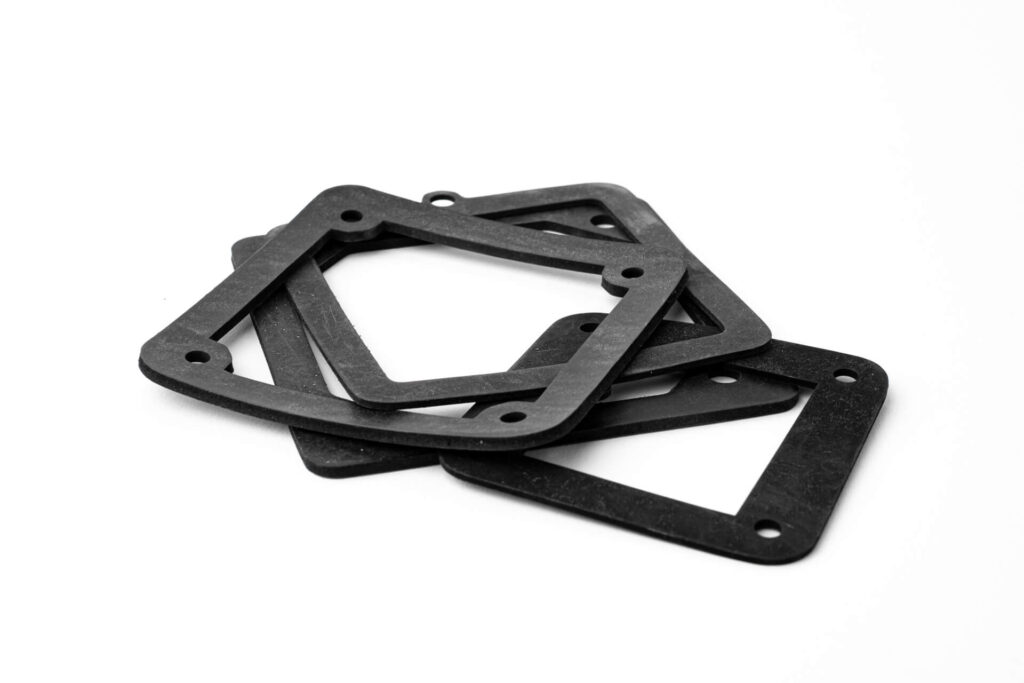
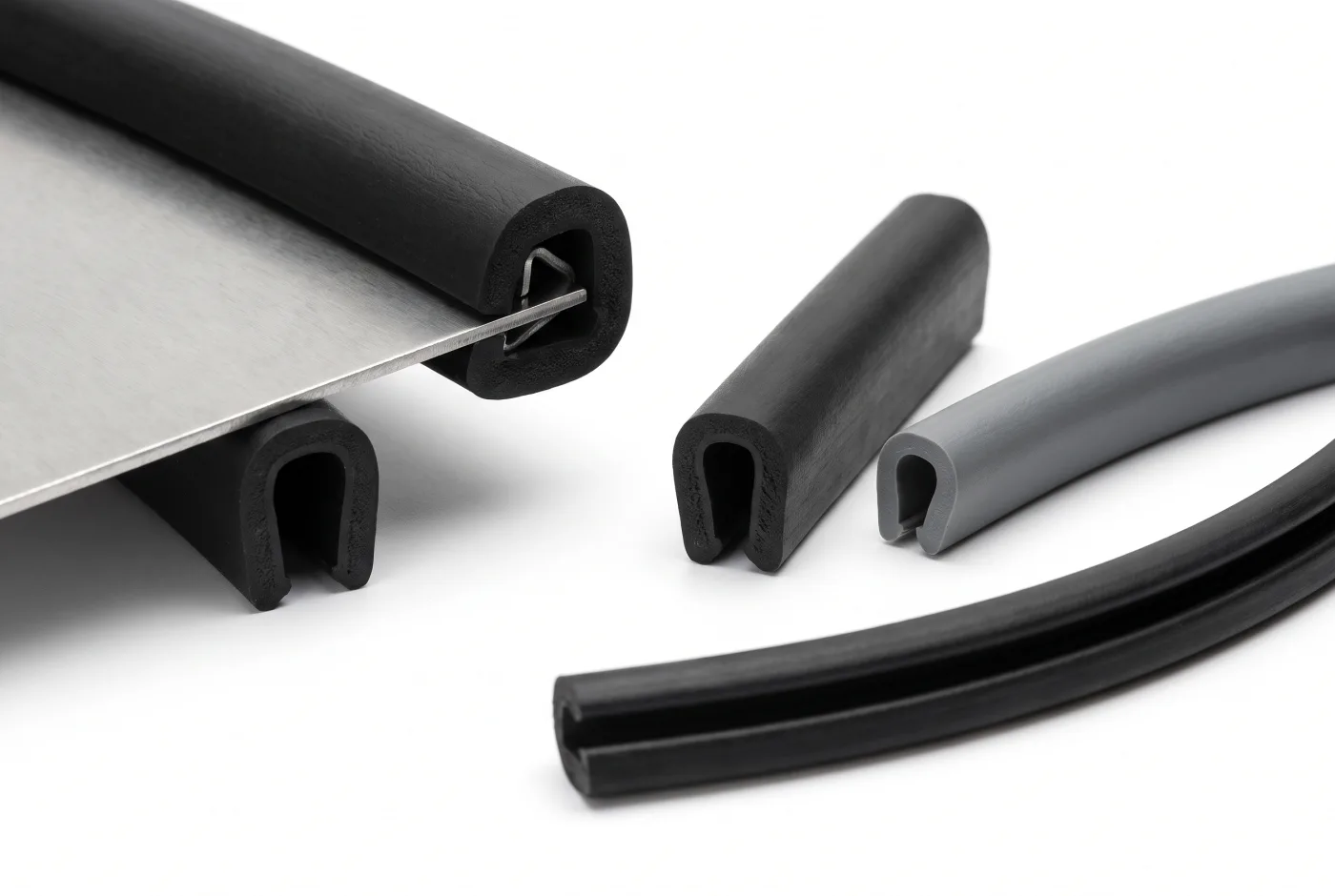
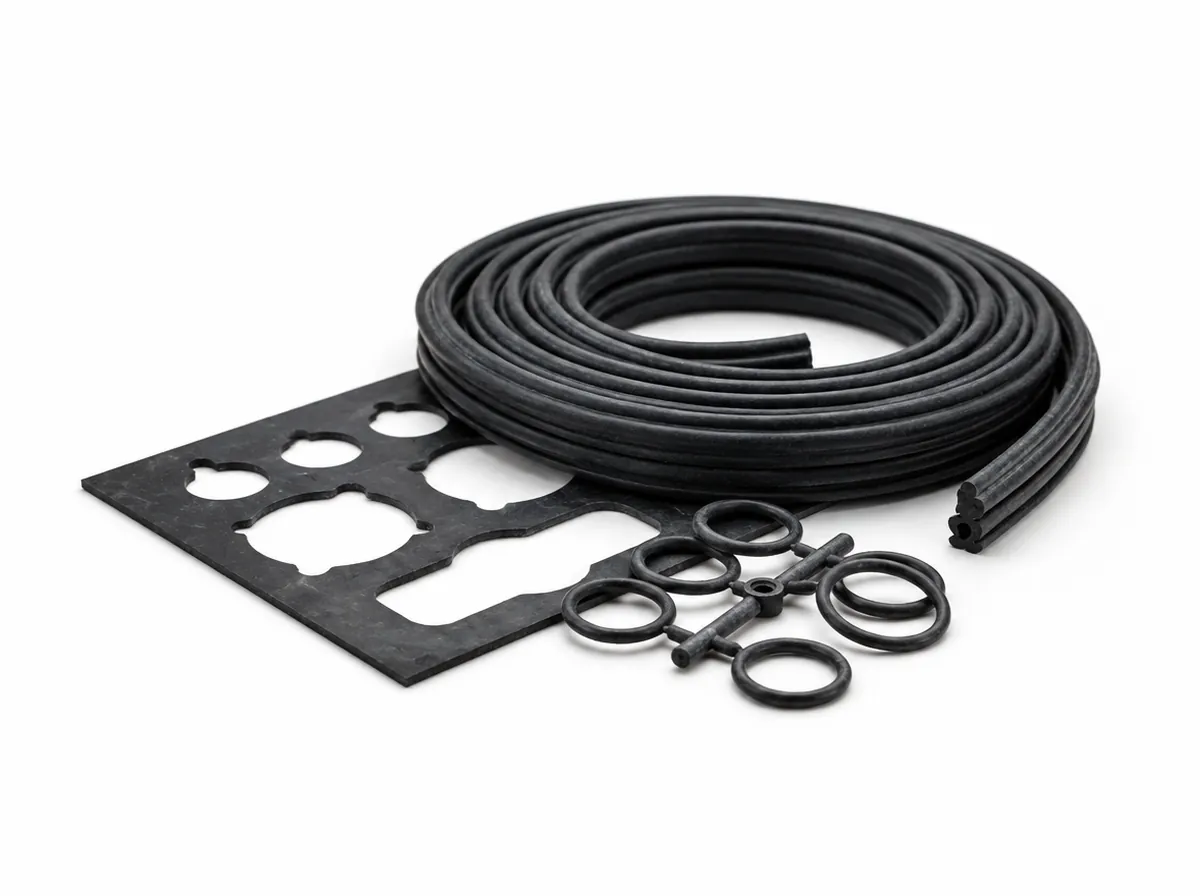
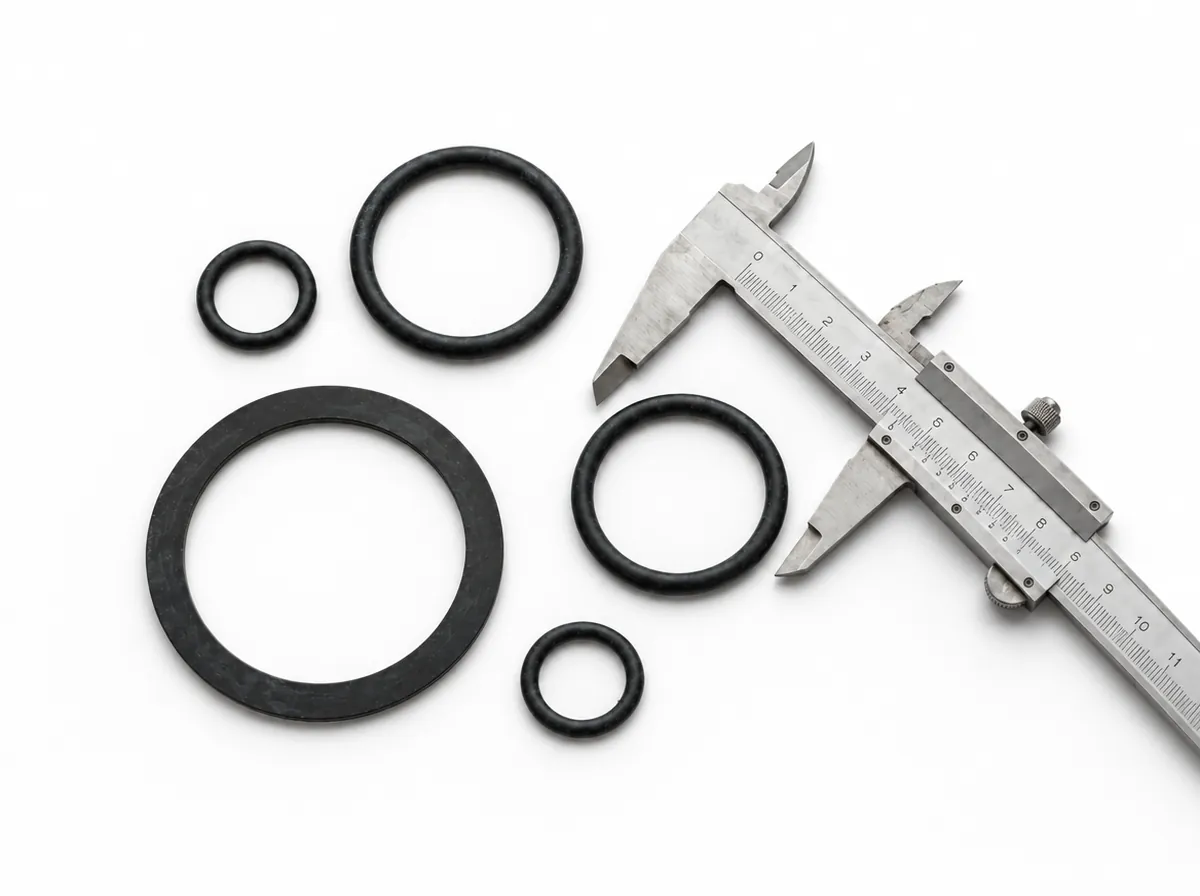
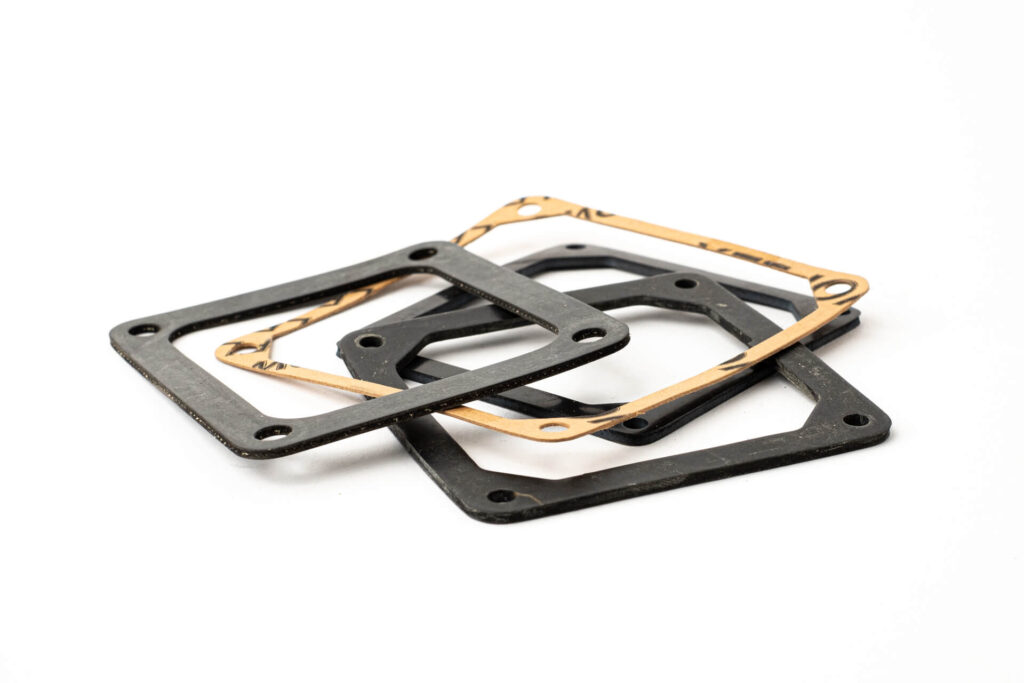
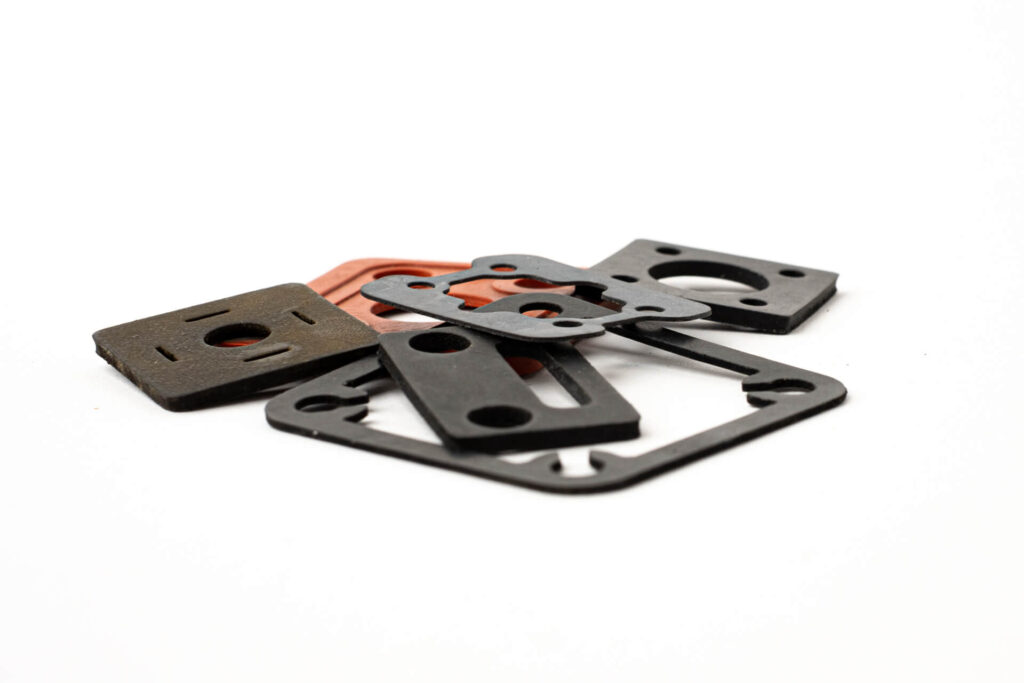
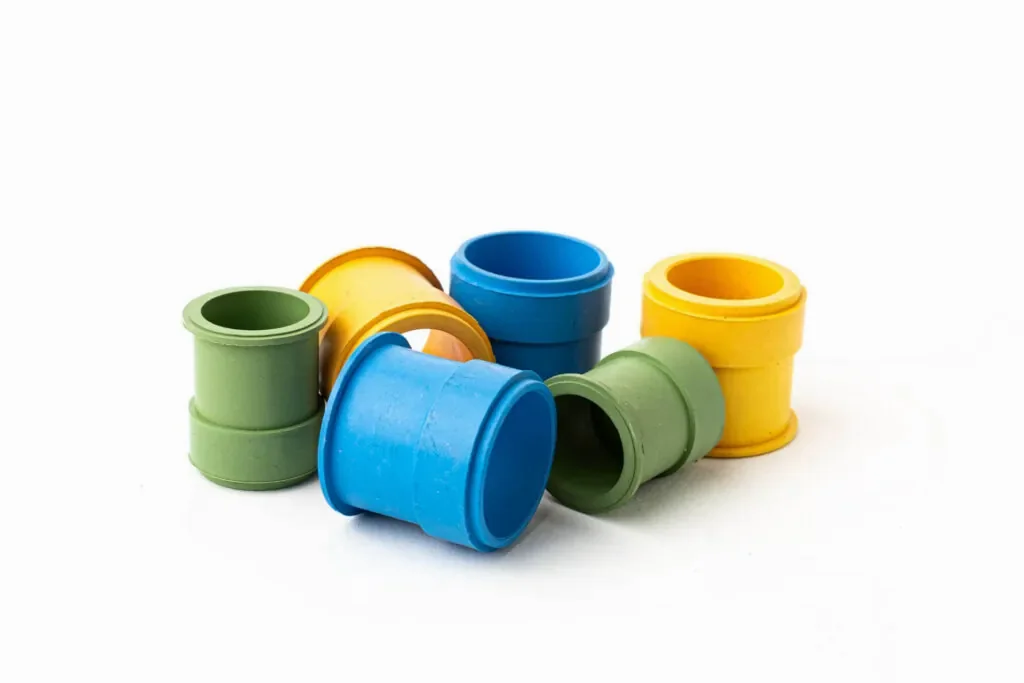
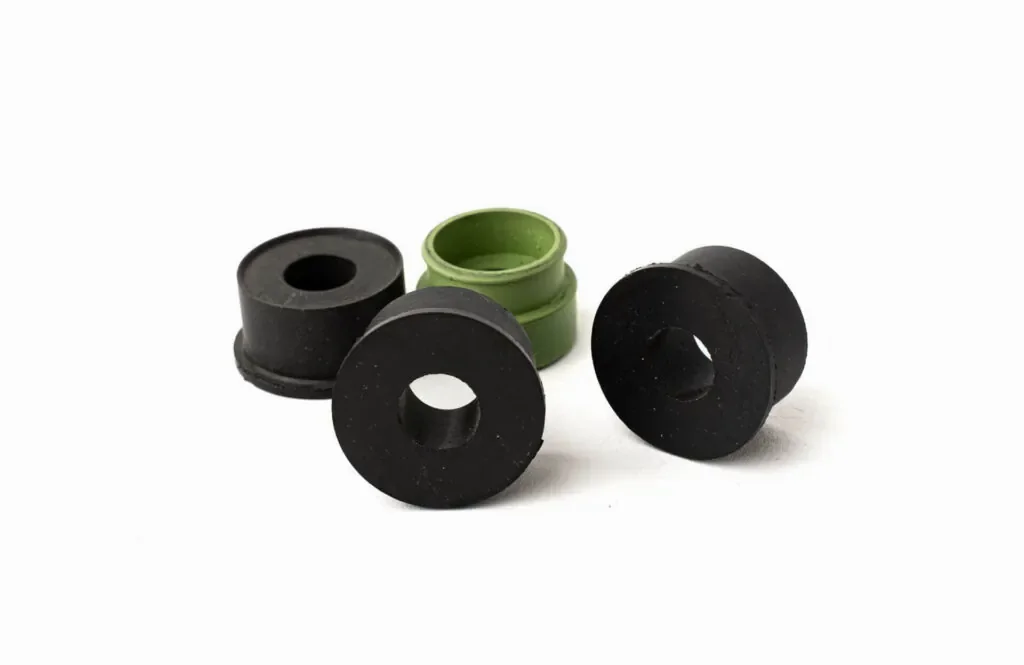
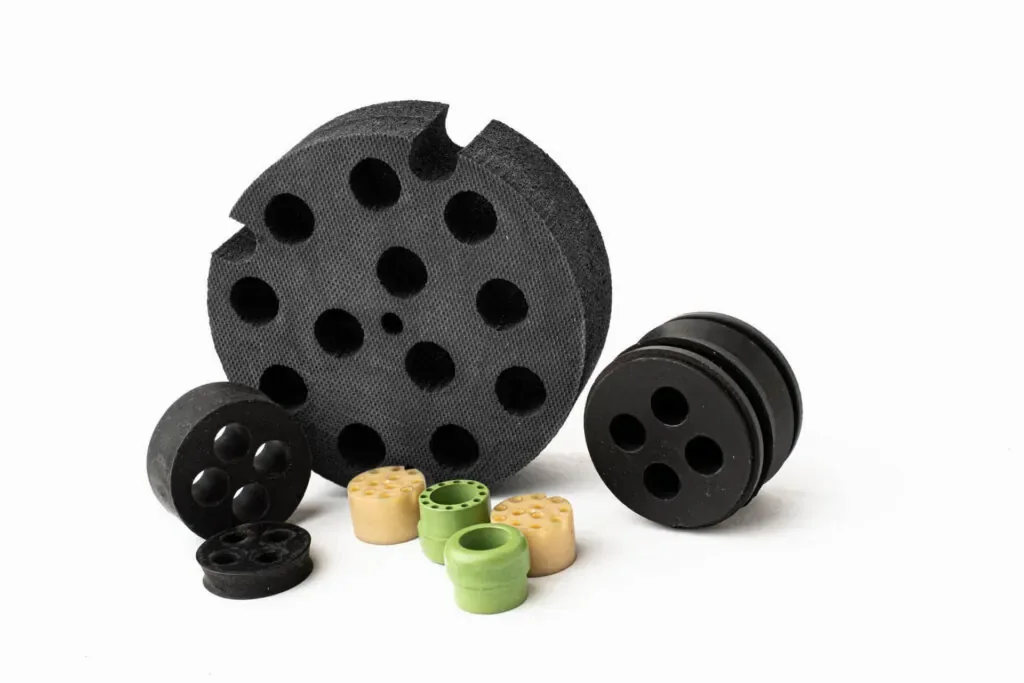
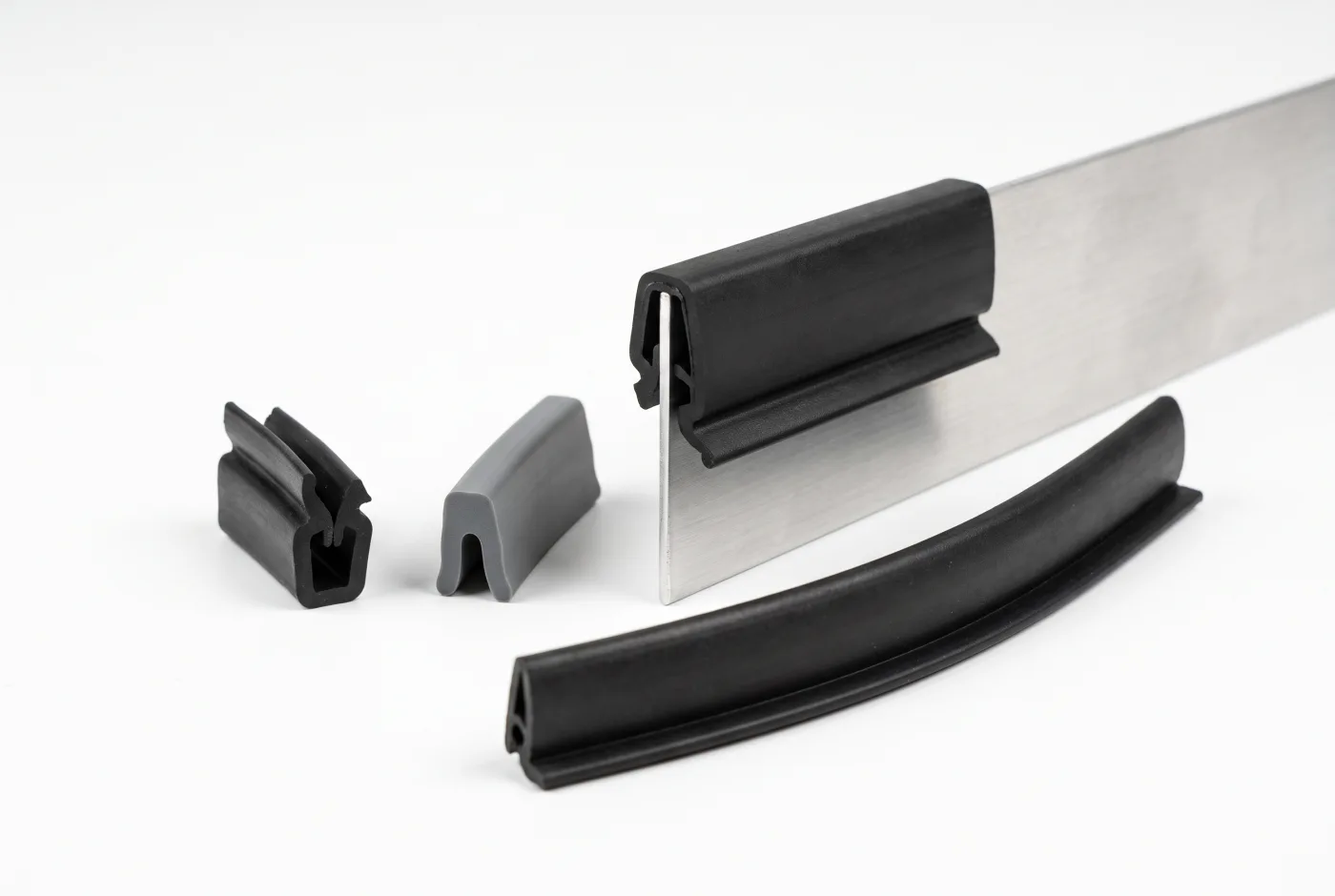
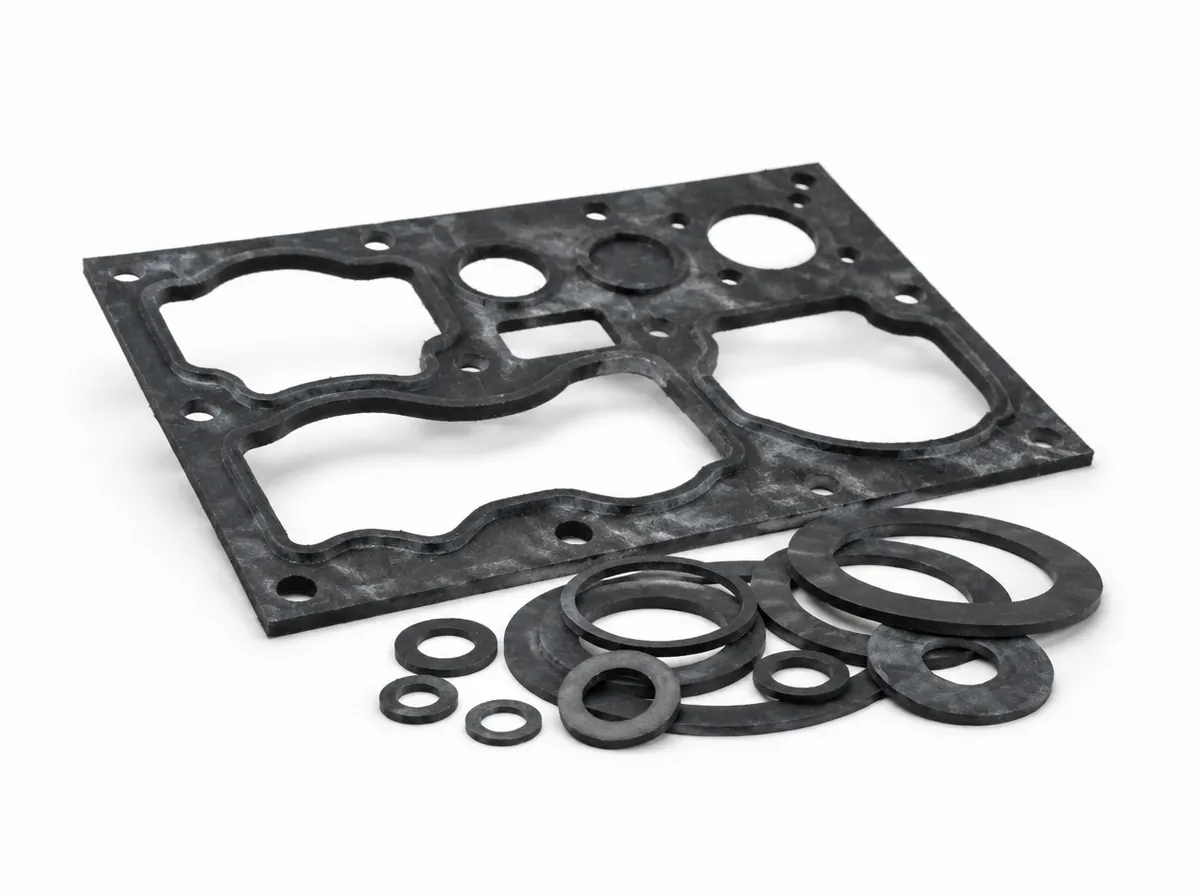
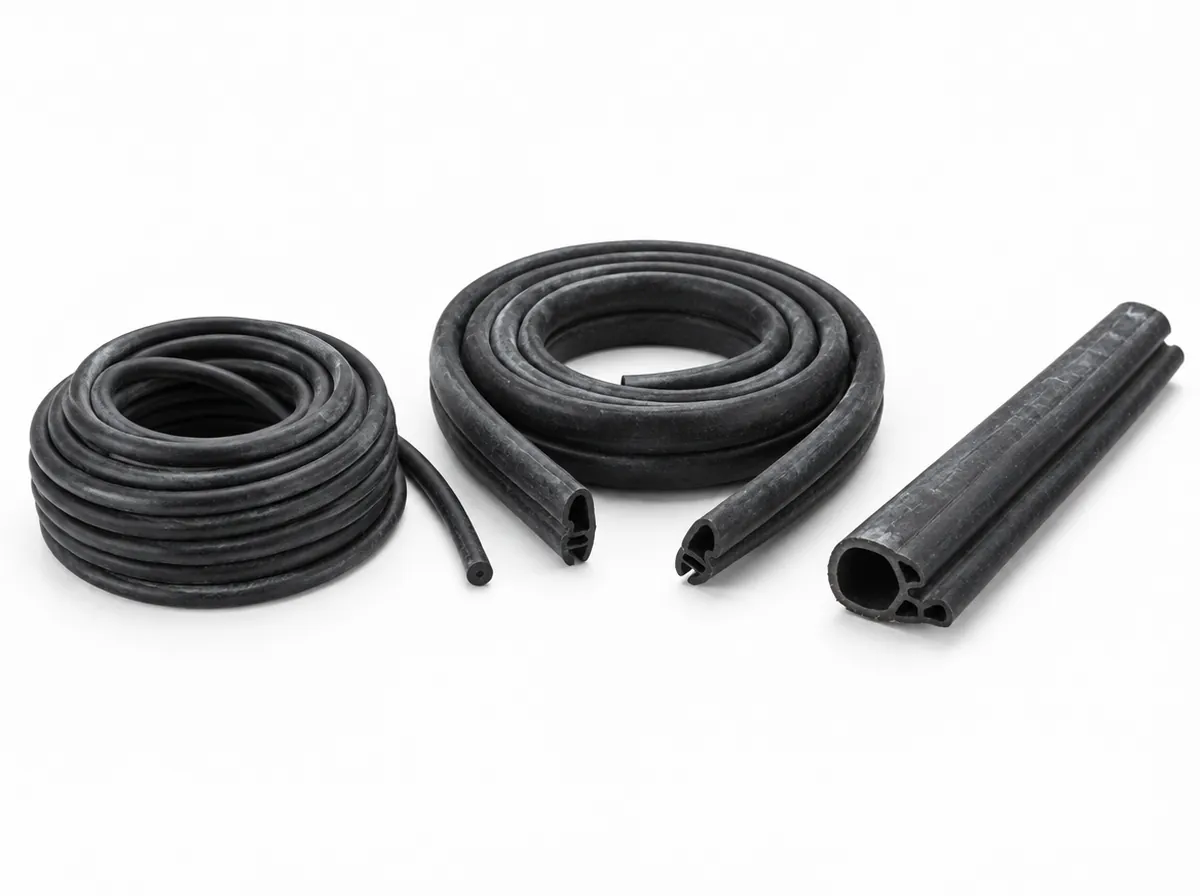
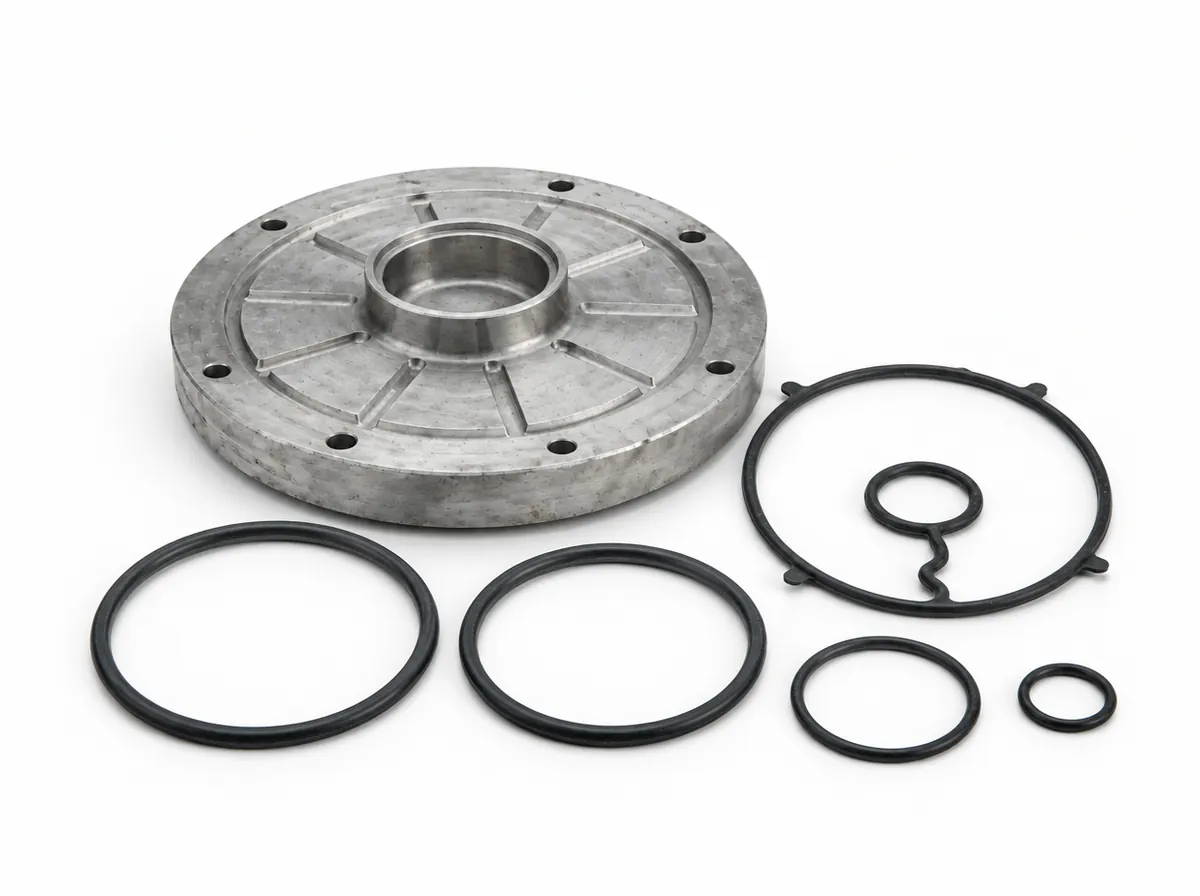
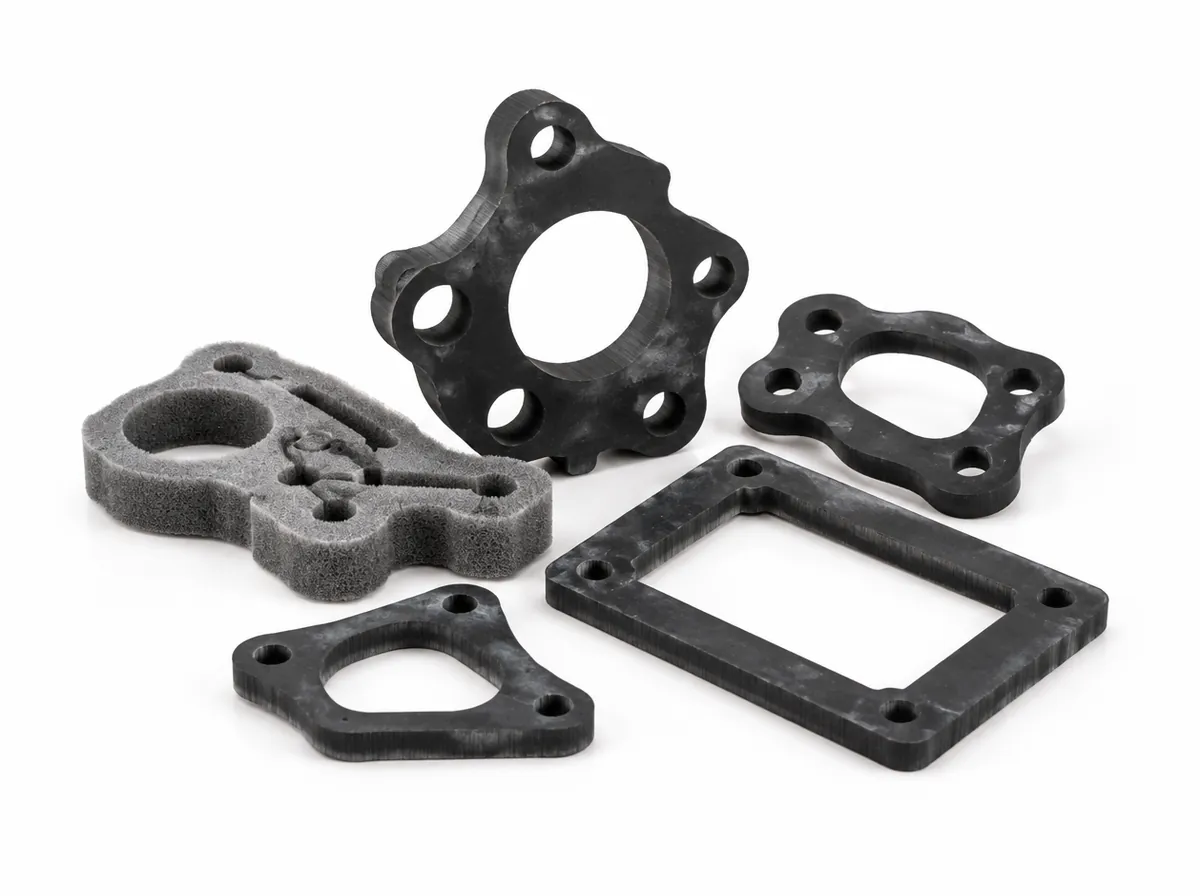
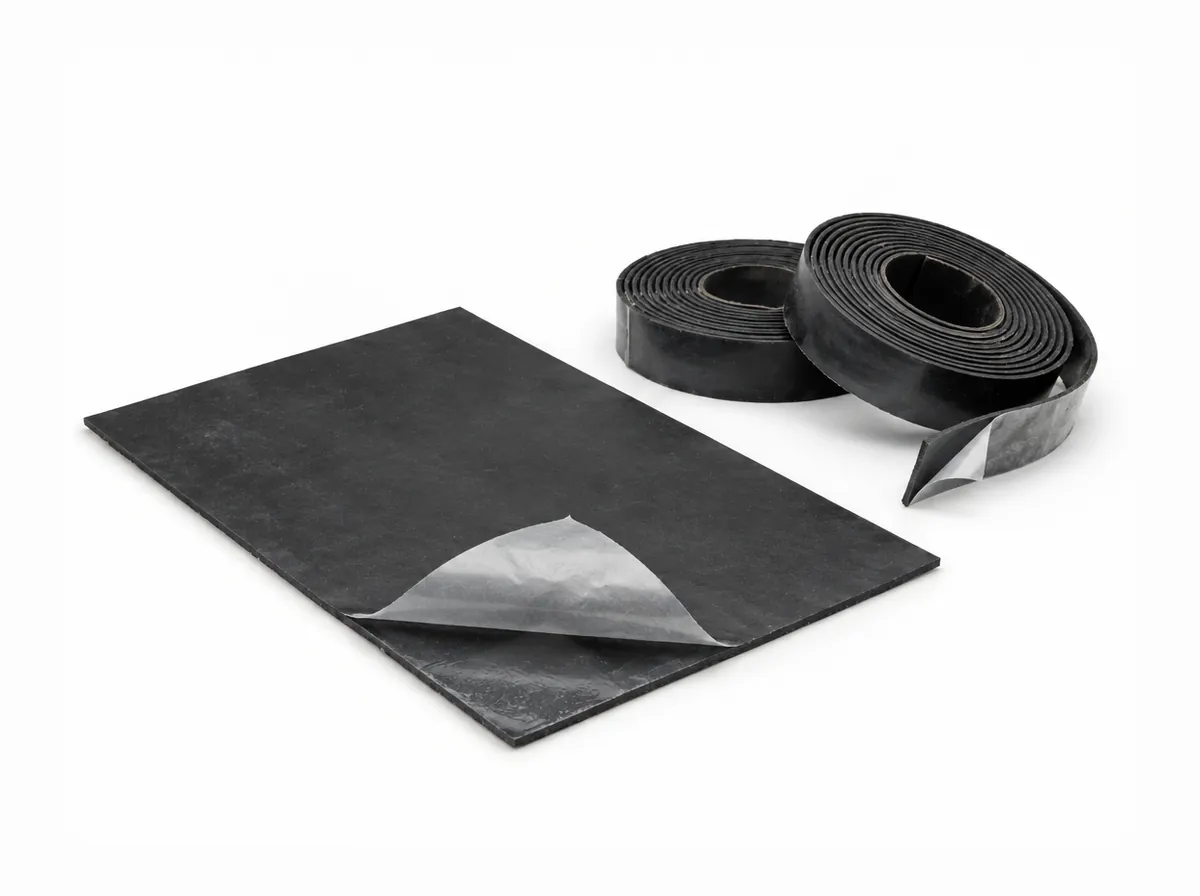
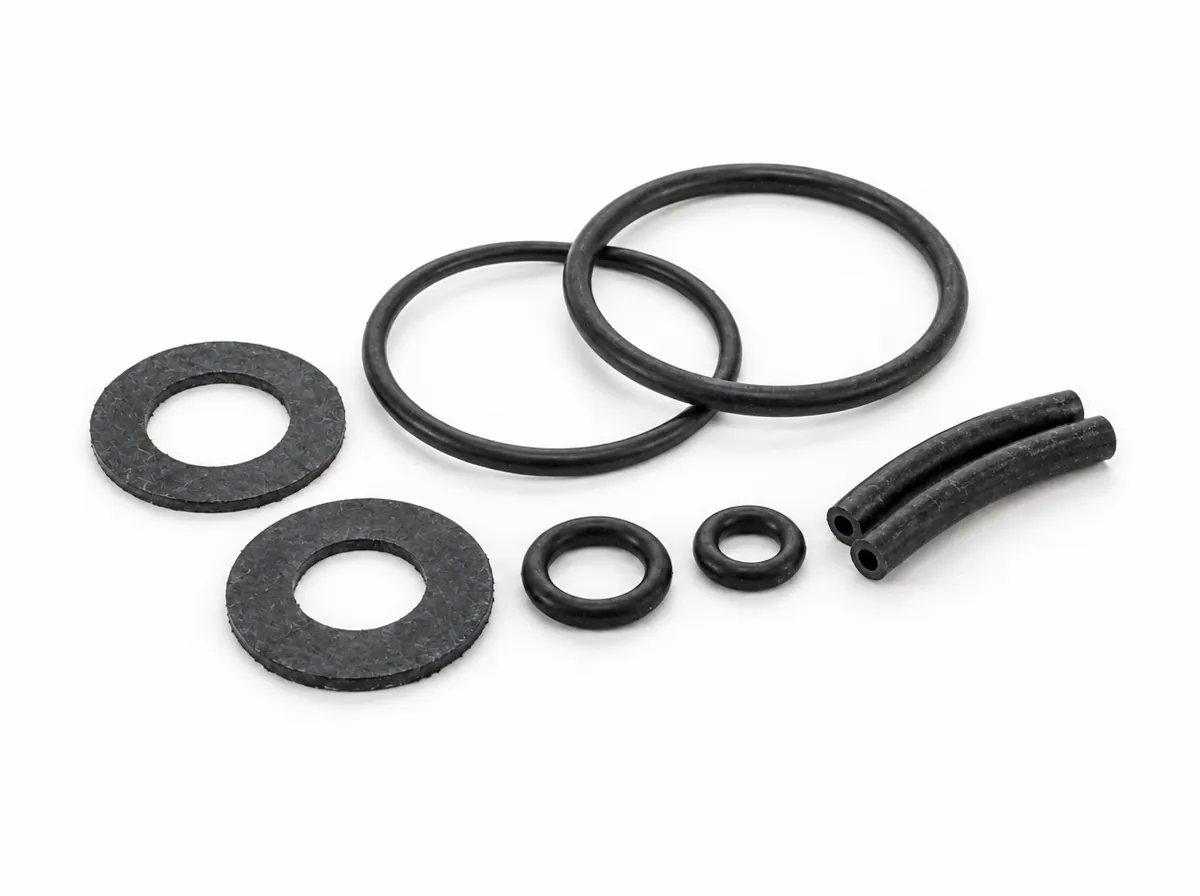
In addition to punched parts, moulded articles and extrusions, we also produce blanks cut by water jet or plotter to your specifications, as sheet or roll cuts. All products are REACH and RoHS compliant. IMDS data, technical data sheets, material lists (Shore hardnesses and material thicknesses) and detailed chemical resistances are available on request.
At a glance
Elastomers, foams, TPE and plastics
NK / NR
Natural rubber
Simple standard grade for applications without demanding requirements. Only very limited resistance to acids and alkalis. Also available as para rubber with good elasticity.
SBR
Styrene-butadiene rubber
Very good abrasion resistance. Only limited resistance to acids and alkalis. Not suitable for contact with oil and fuel. Generally used as a compound component in other elastomers.
NBR
Nitrile-butadiene rubber
Good abrasion resistance and very good resistance to most oils and lubricants. Not recommended for acids and alkalis. Available with food approvals to FDA, BfR and EC 1935/2004.
H-NBR
Hydrogenated nitrile-butadiene rubber
High-quality all-round elastomer with a wide temperature range and very good wear and ageing behaviour.
EPDM
Ethylene propylene diene monomer
Very good UV, ozone and weather resistance. Excellent for outdoor use, resistant to seawater. Not suitable for contact with oil. Available with drinking water approvals to KTW-BWGL, EN 16421 (W270) and food approvals to FDA, BfR, EC 1935/2004.
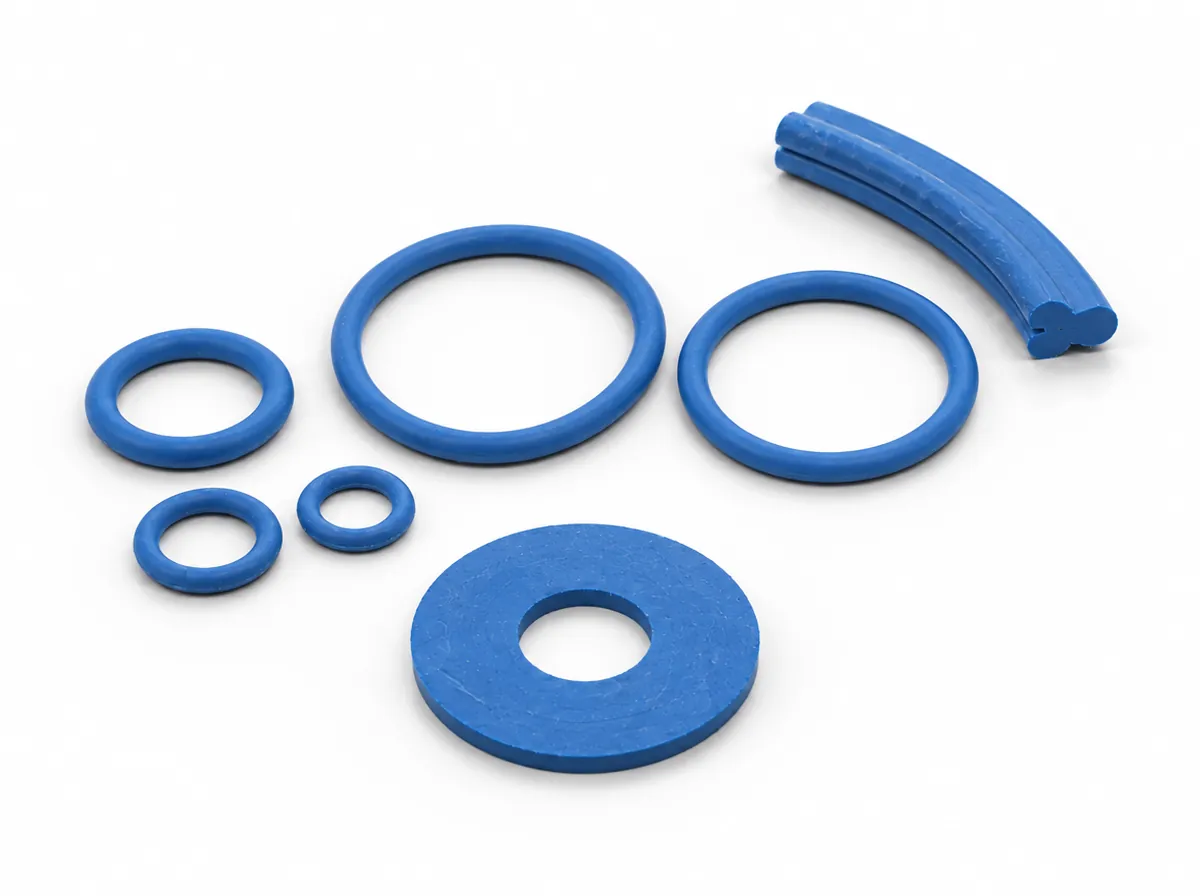
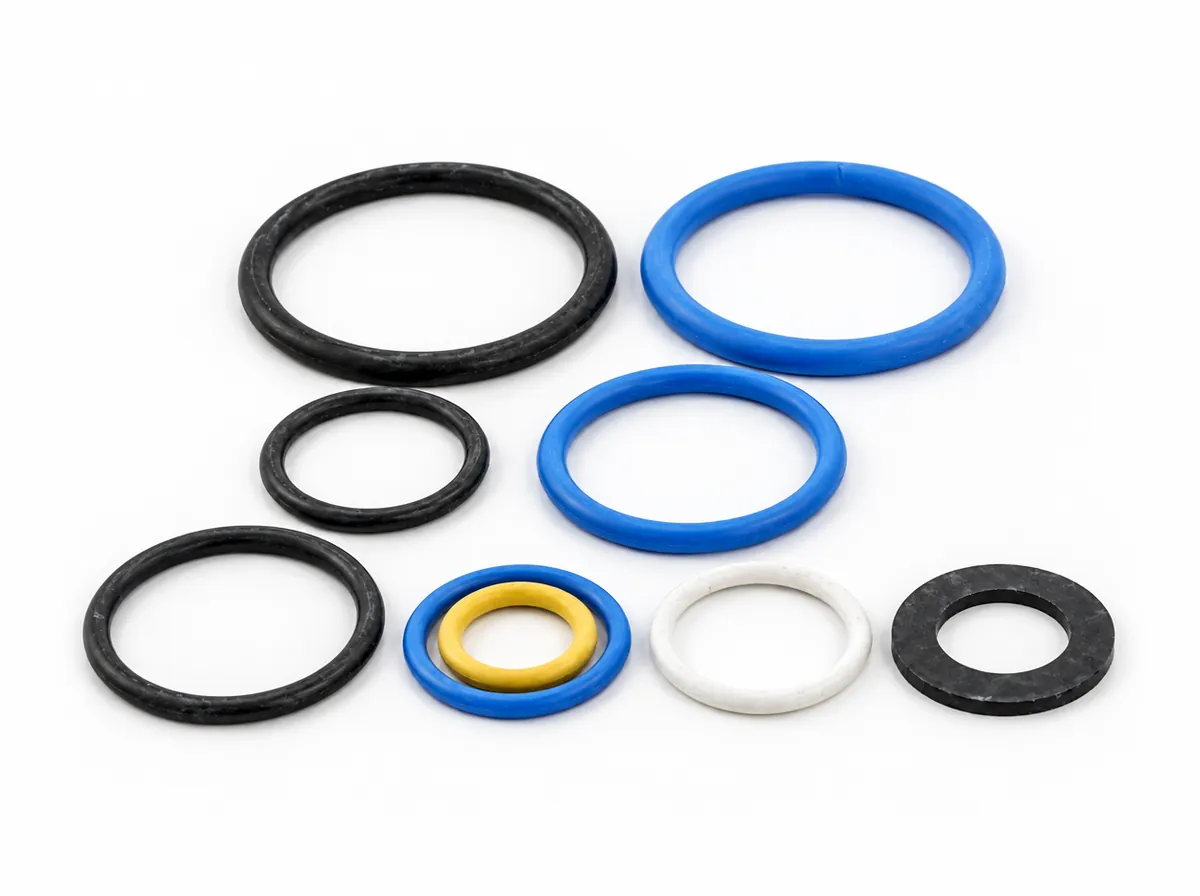
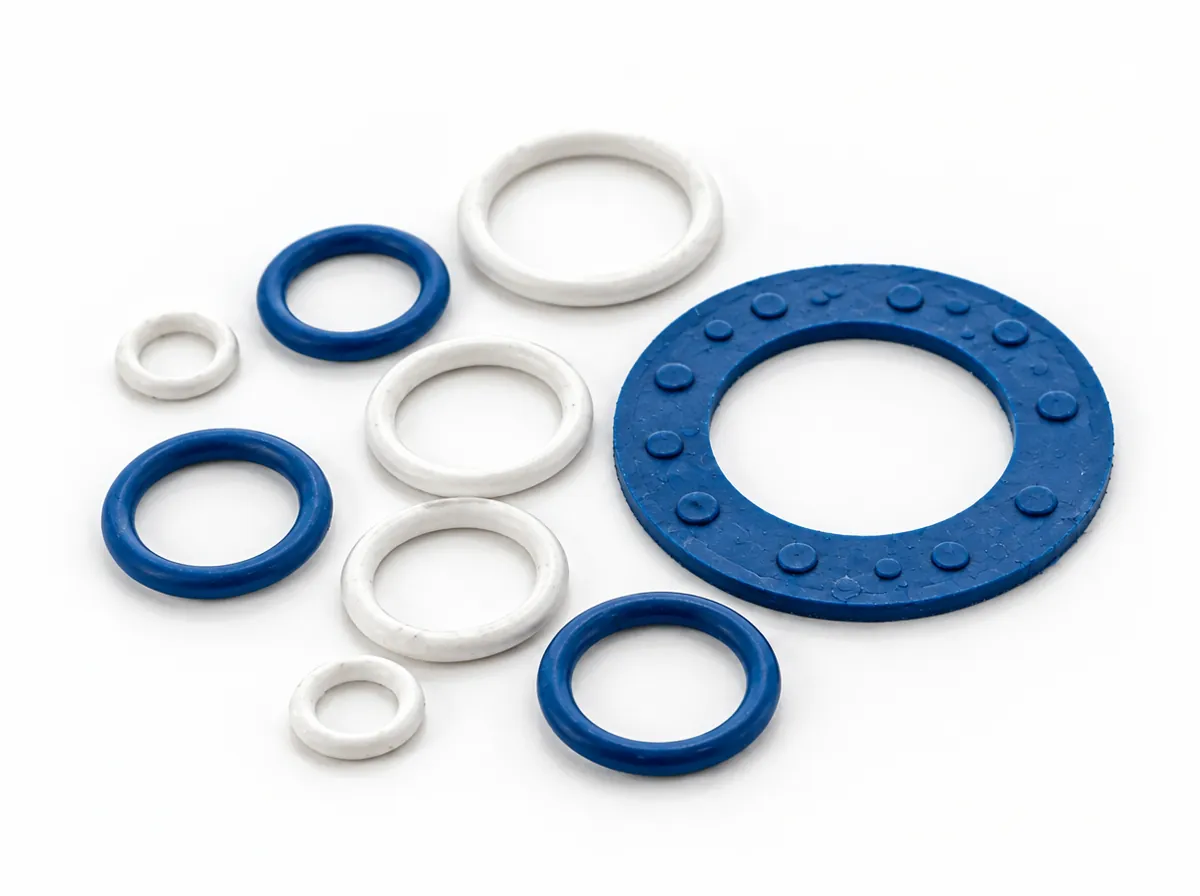
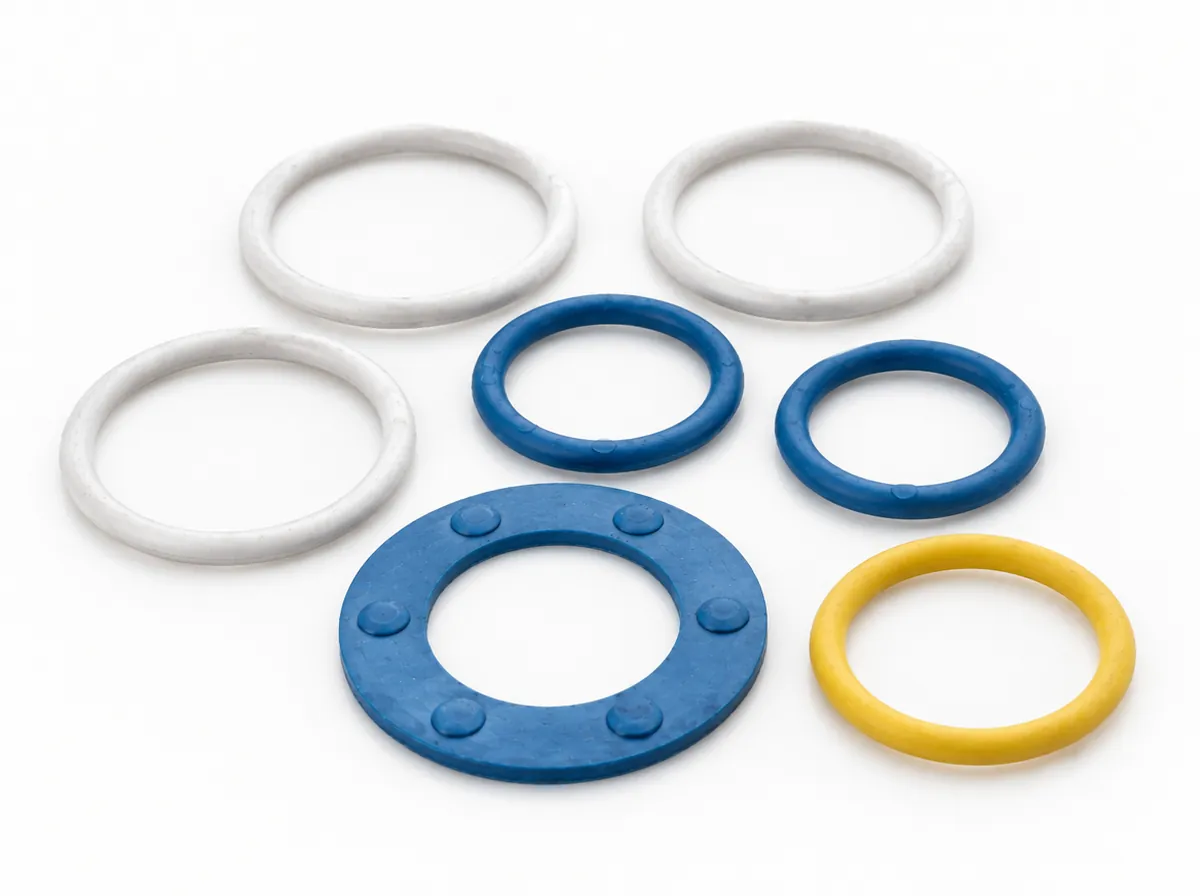
EPDM blue
Drinking water & food
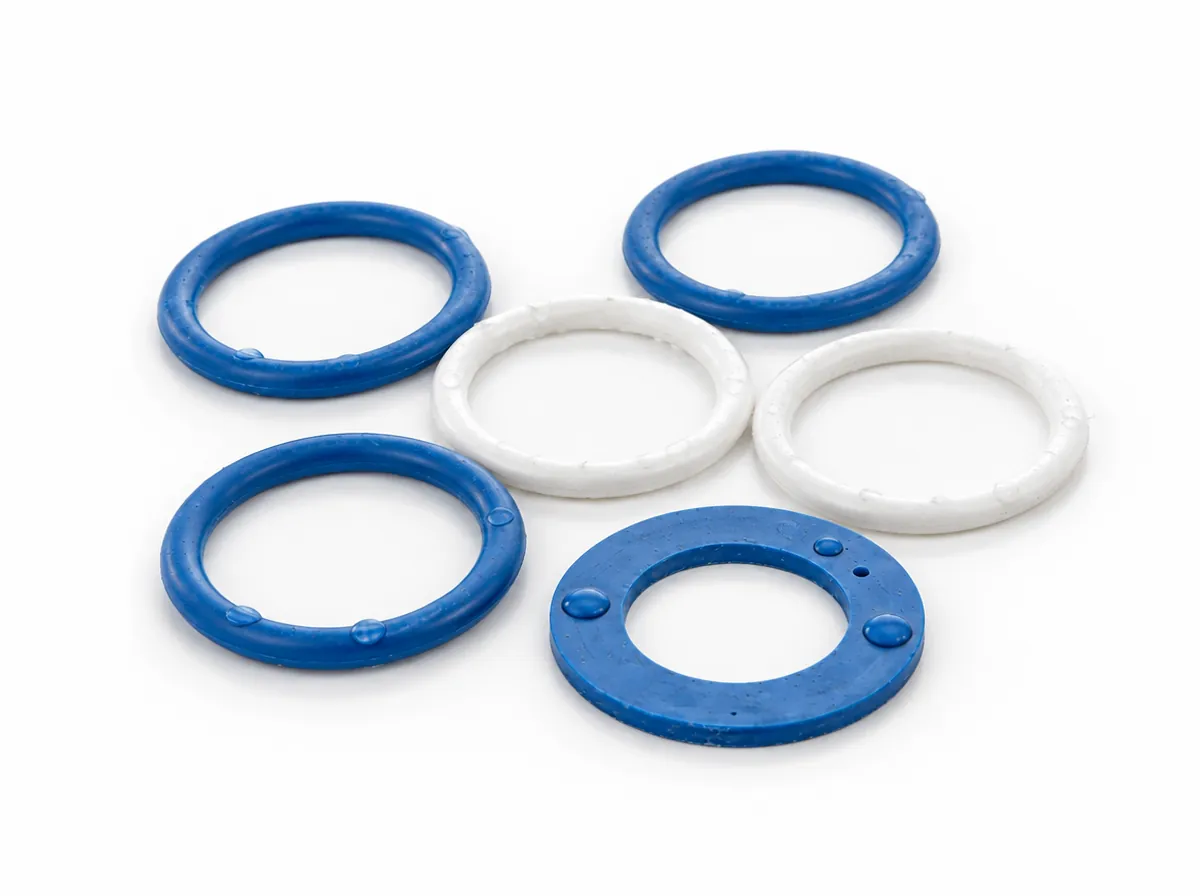
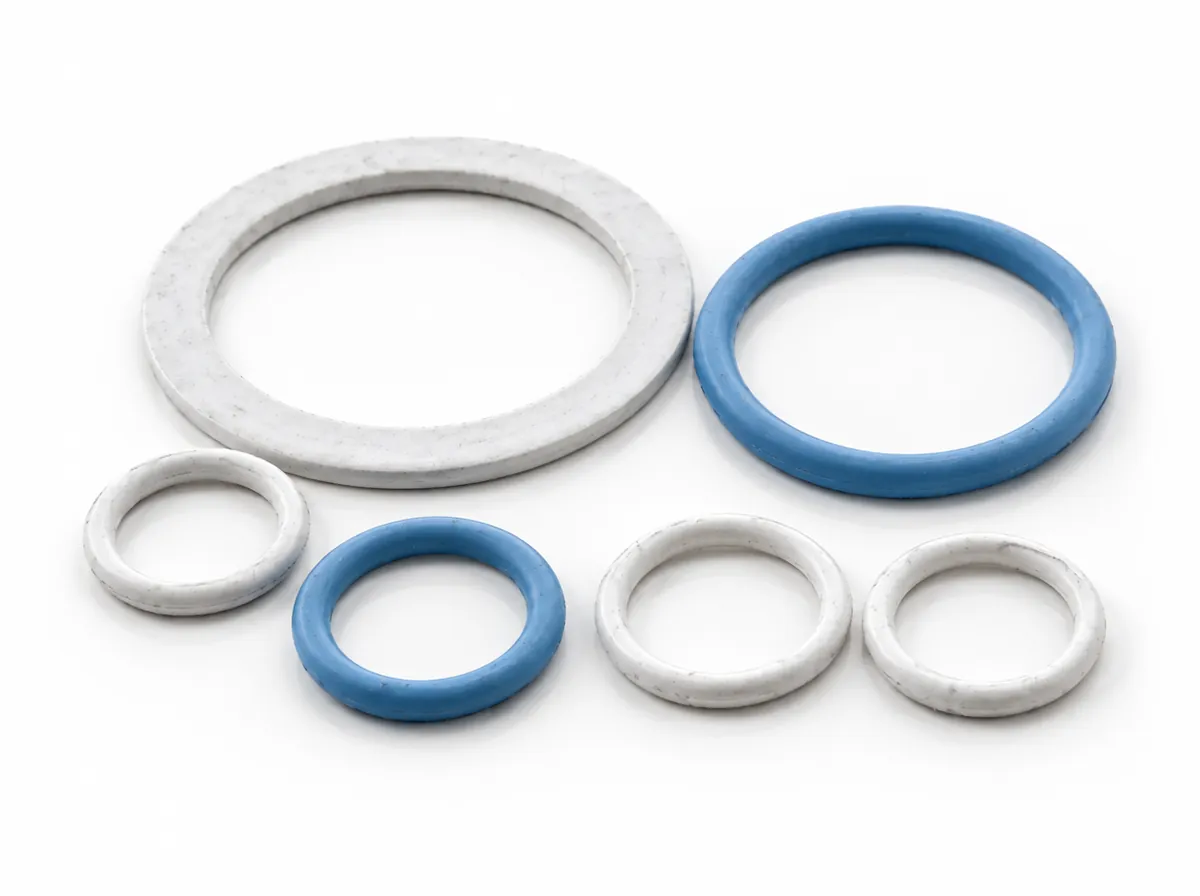
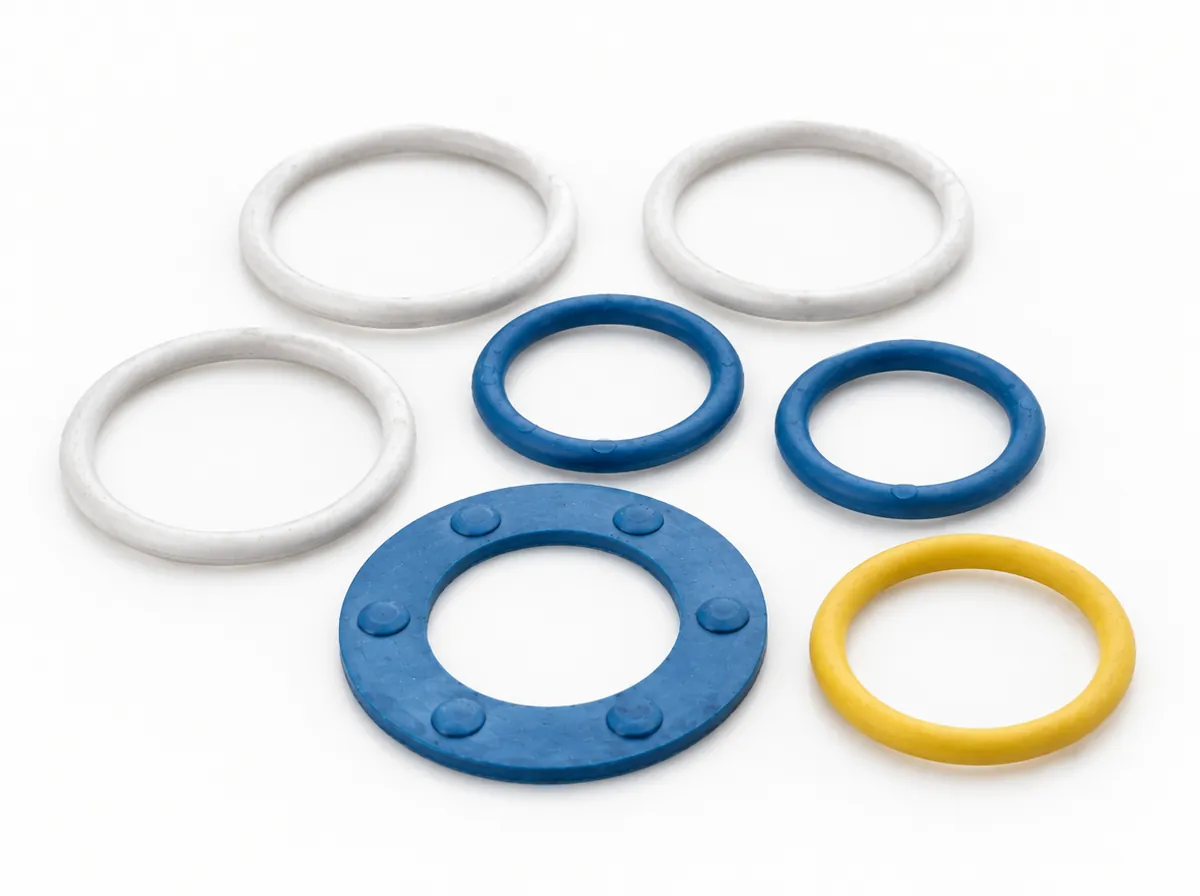
New compound in the typical drinking water blue, KTW-BWGL, FDA and EC 1935/2004 compliant, peroxide-cured, 70 Shore A, up to +150 °C.
CR
Chloroprene, neoprene
Good weather and ozone resistance, only limited resistance to fuels, not recommended for acids. Self-extinguishing (flame-retardant), e.g. to UL94 or FMVSS 302. Contains halogens.
Silicone (VMQ)
Solid silicone
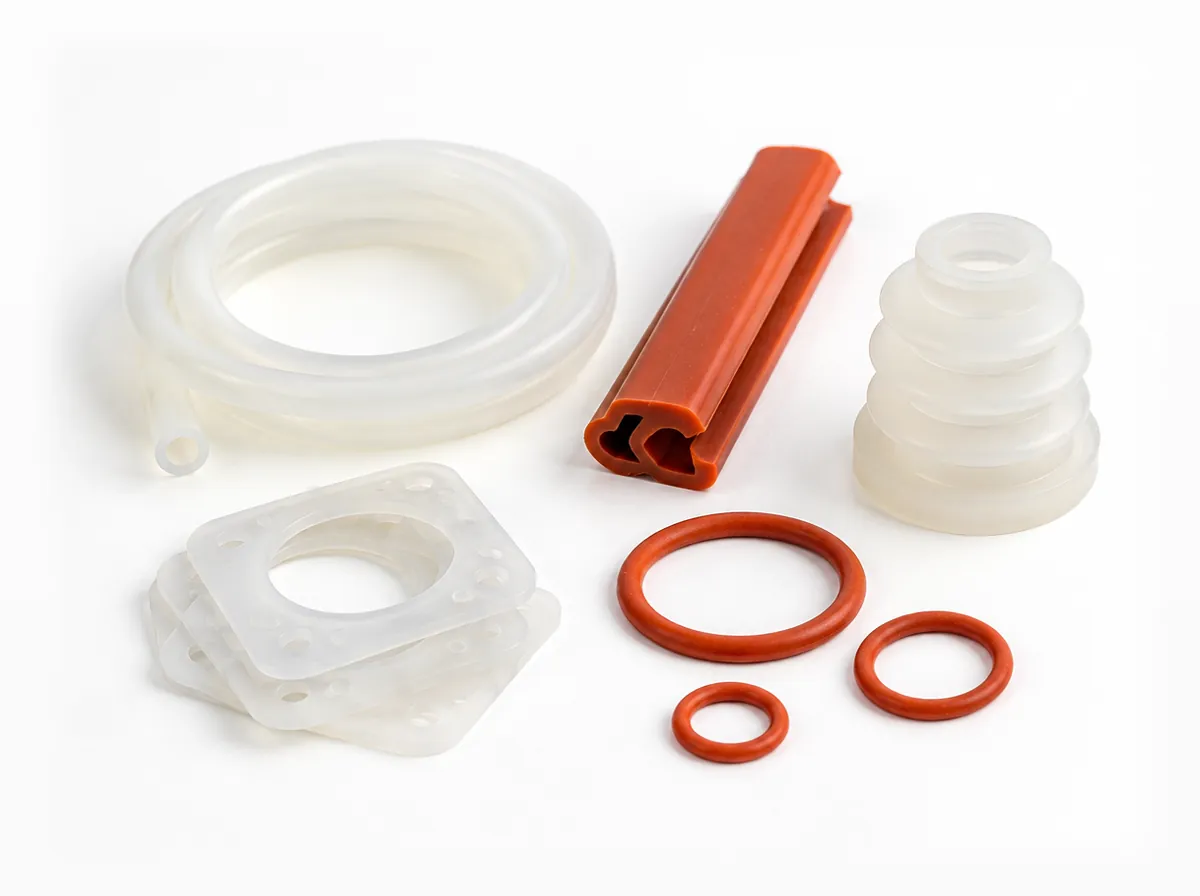
Suitable for high temperatures up to approx. 200 °C. Very good UV, weather and ozone resistance. Also suitable for contact with oil. Available with food approvals to FDA, BfR and EC 1935/2004.
LSR
Liquid silicone
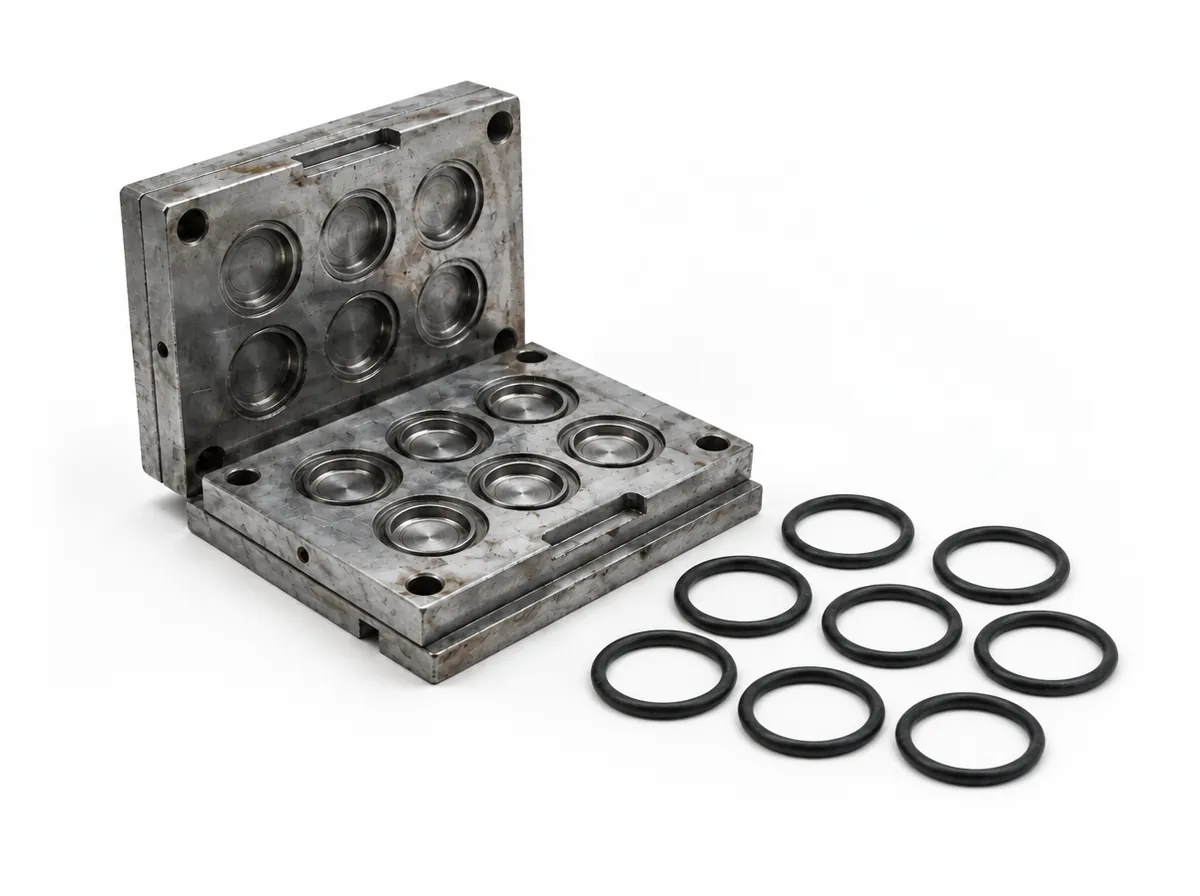
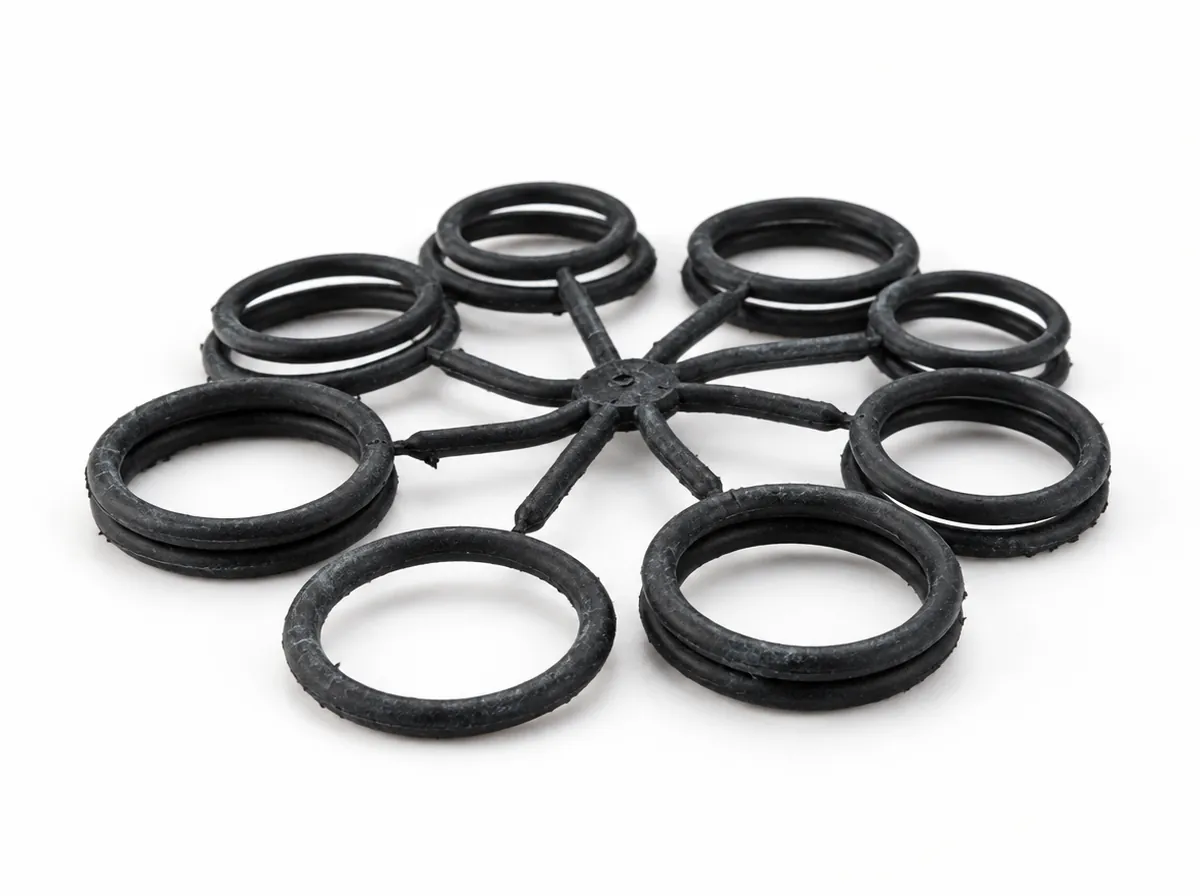
Excellent flowability, ideal for producing moulded articles as well as O-rings, seals and hoses.
Viton
FPM, FKM, FFKM
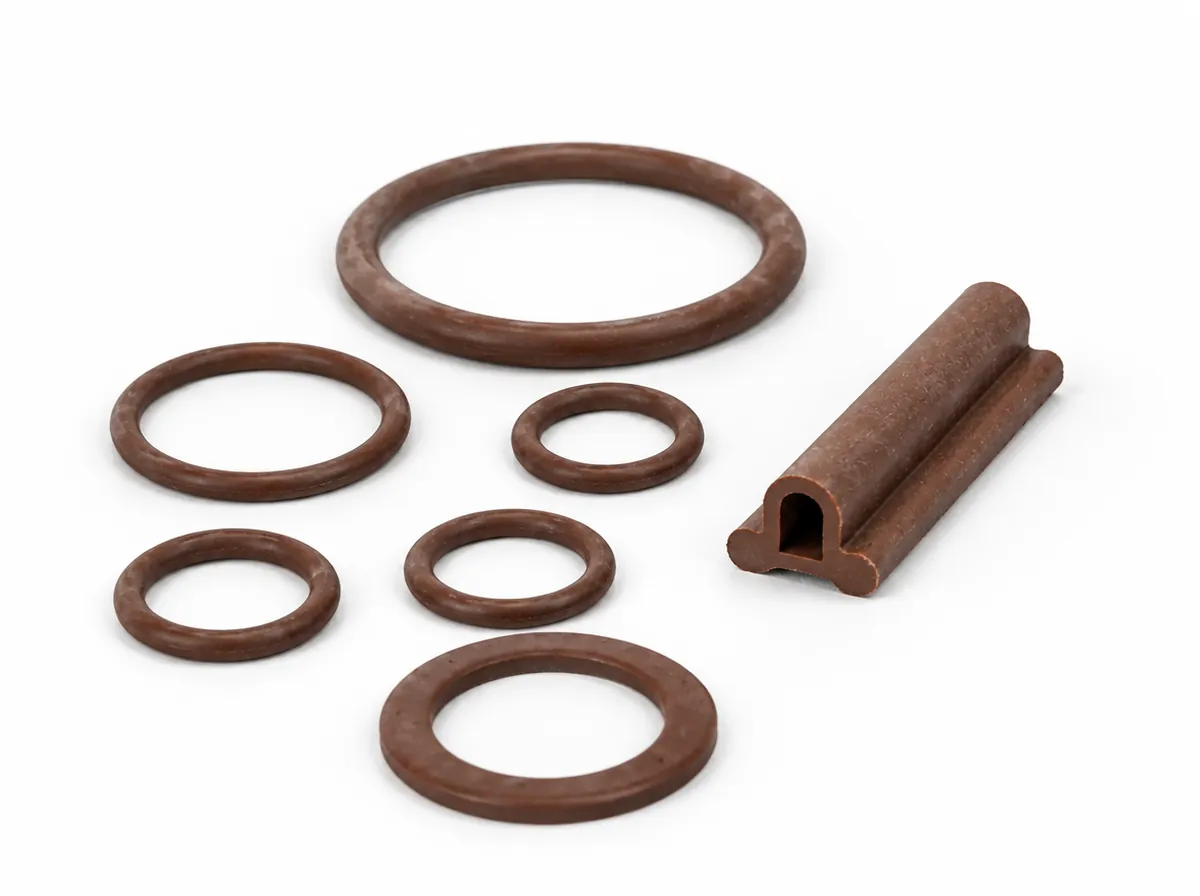
Ideally suited for high temperatures up to approx. 250 °C. Very good UV, weather and ozone resistance. Good fuel resistance, also suitable for contact with oil.
AEM / ACM
Ethylene acrylate / acrylate rubber
For hot oils and gear oils, better temperature resistance than NBR. Typical in engine and gearbox manufacturing and in the automotive industry. AEM remains more flexible at low temperatures than ACM.
TPE
Thermoplastic elastomers
Good abrasion resistance and tensile strength, UV and weather resistant, free of plasticisers, high temperature resistance, recyclable. All RAL colours can be produced from this material.
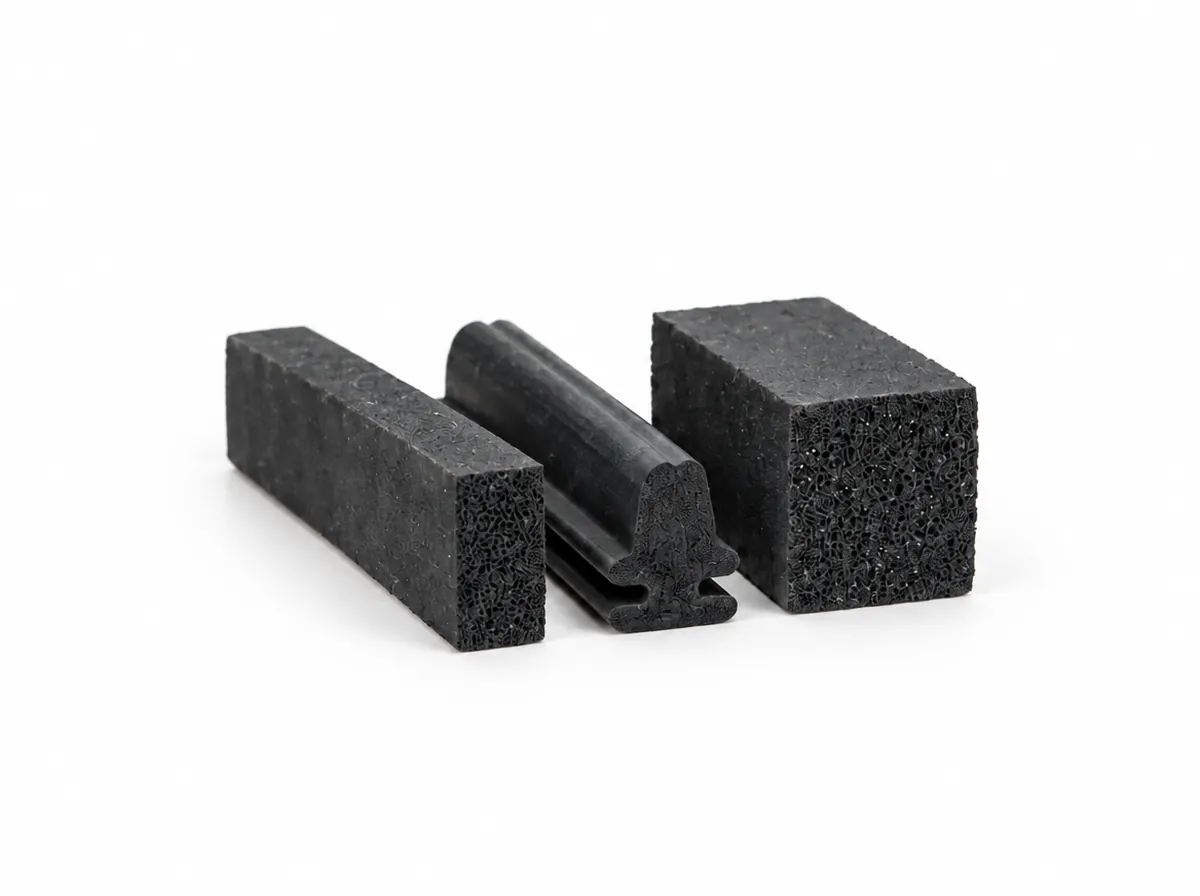
Sponge rubber
Open-cell foam
Open-cell foam in various grades such as NBR, CR and EPDM, with the individual properties of the respective elastomers.
Cellular rubber
Closed-cell foam
Closed-cell foam in various grades such as NR, EPDM, CR and NBR, with the individual properties of the respective elastomers.
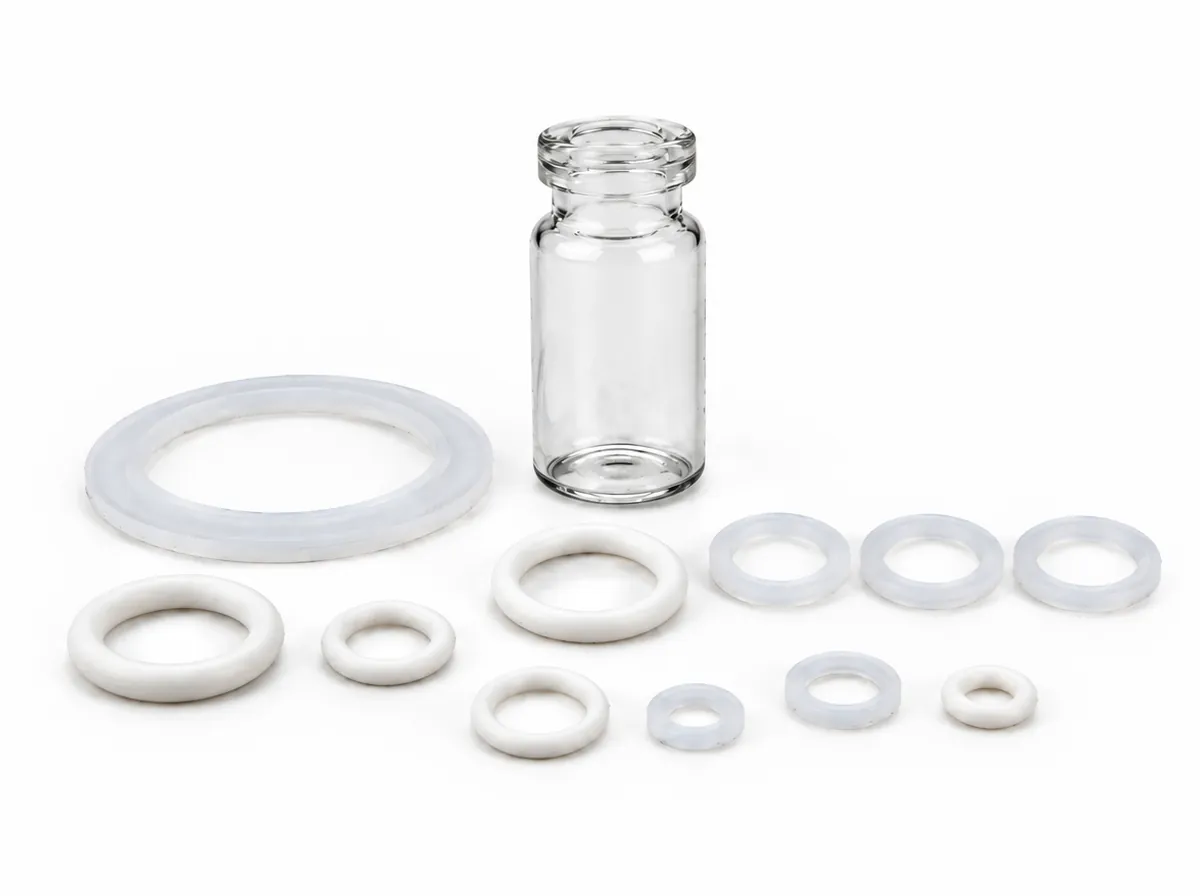
Silicone foam
Foamed silicone
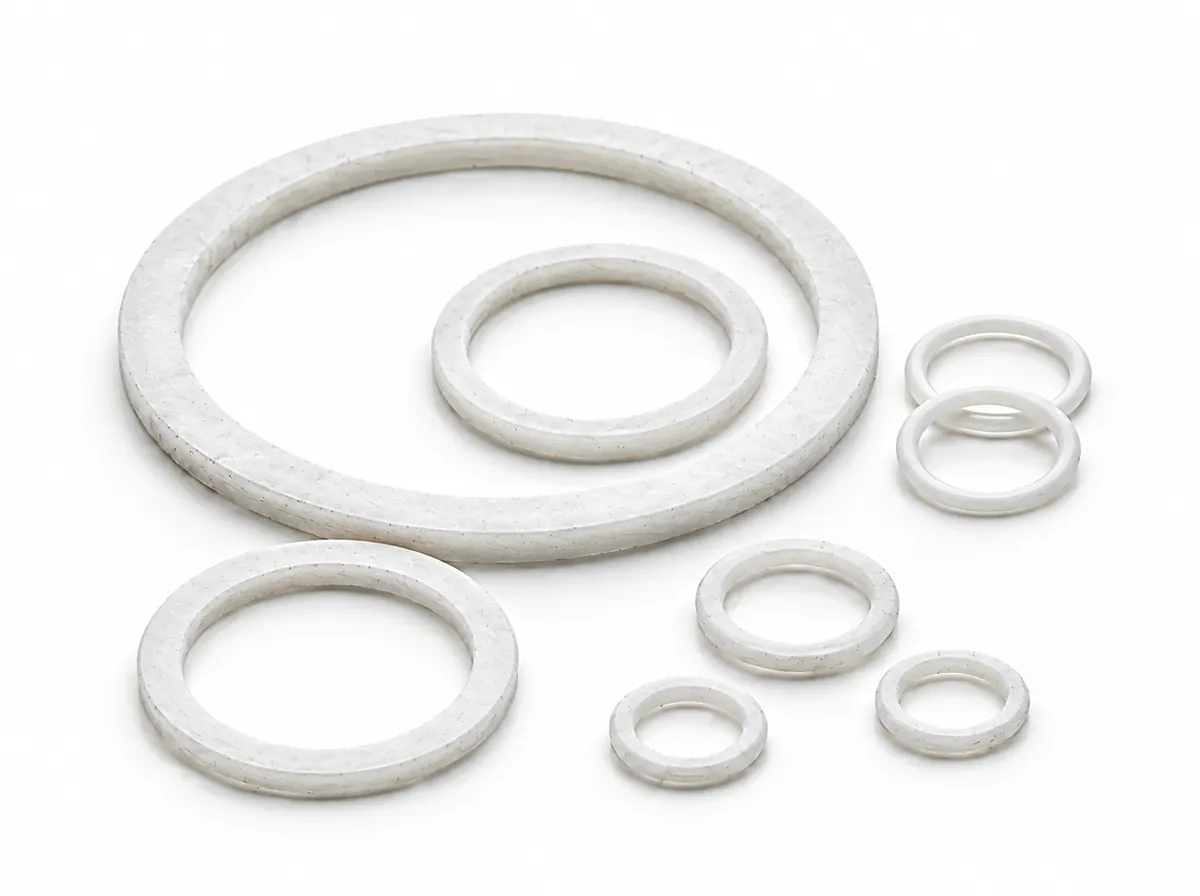
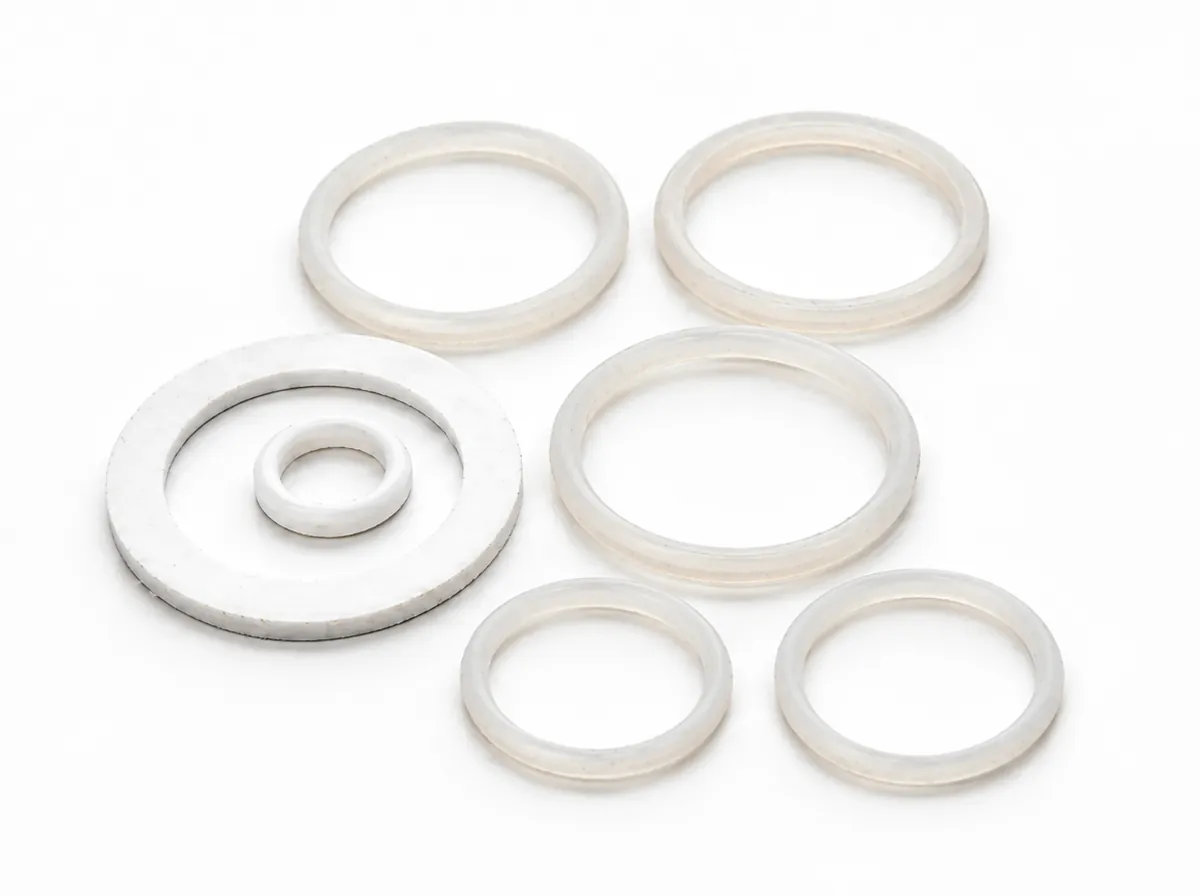
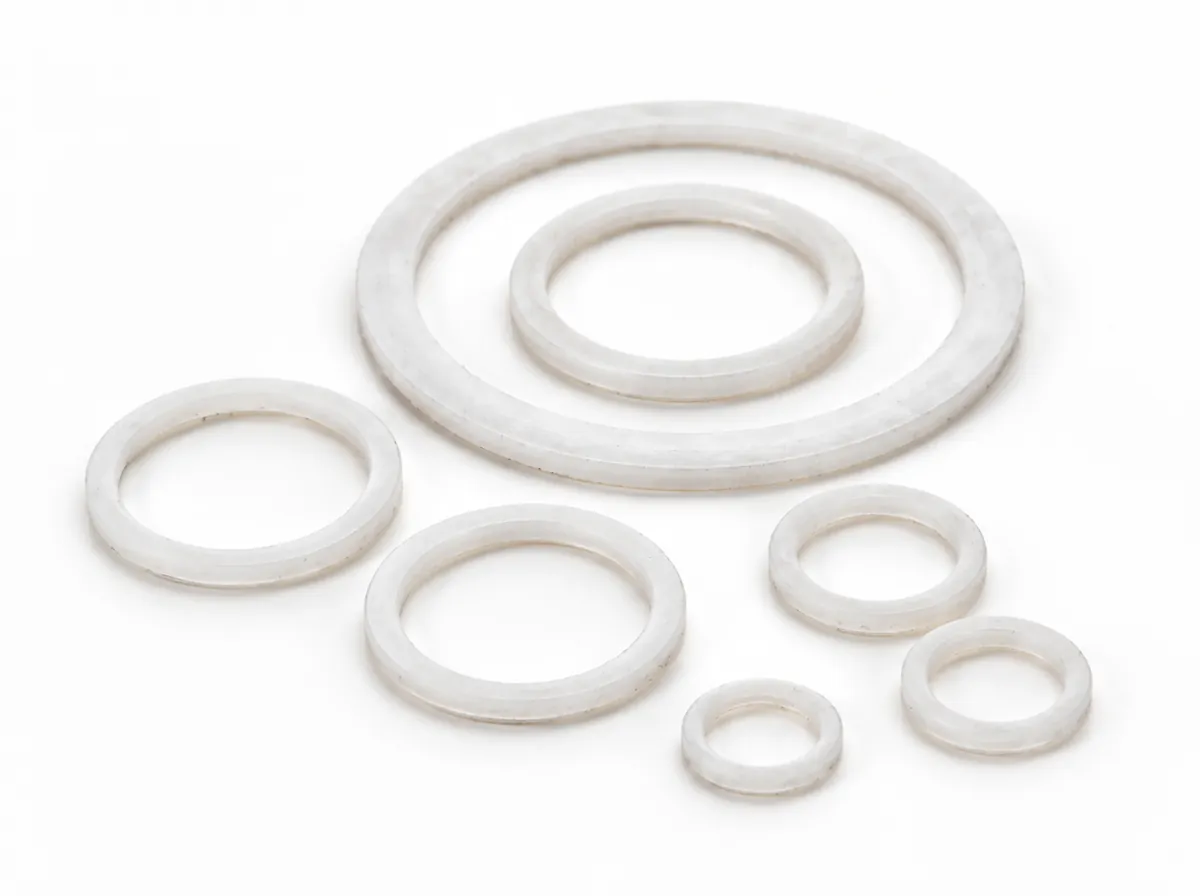
Closed-cell foamed material with high temperature resistance. In light/white or blue. Available with food approvals to FDA, BfR and EC 1935/2004.
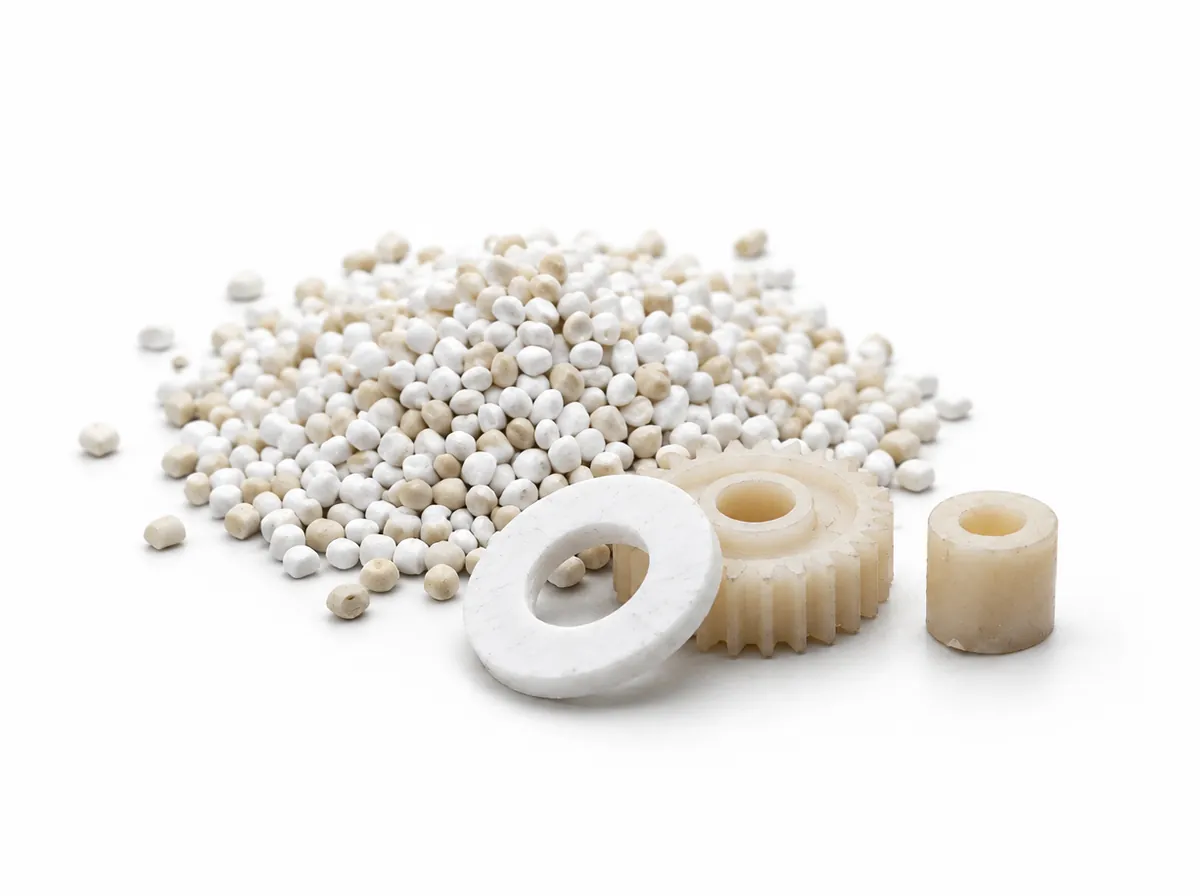
Plastics
Thermoplastics (PVC, PA, PC, PE, PP)
Good wear and abrasion resistance, good strength and impact resistance, various chemical resistances through to very good electrical insulation properties. Many RAL colours possible.
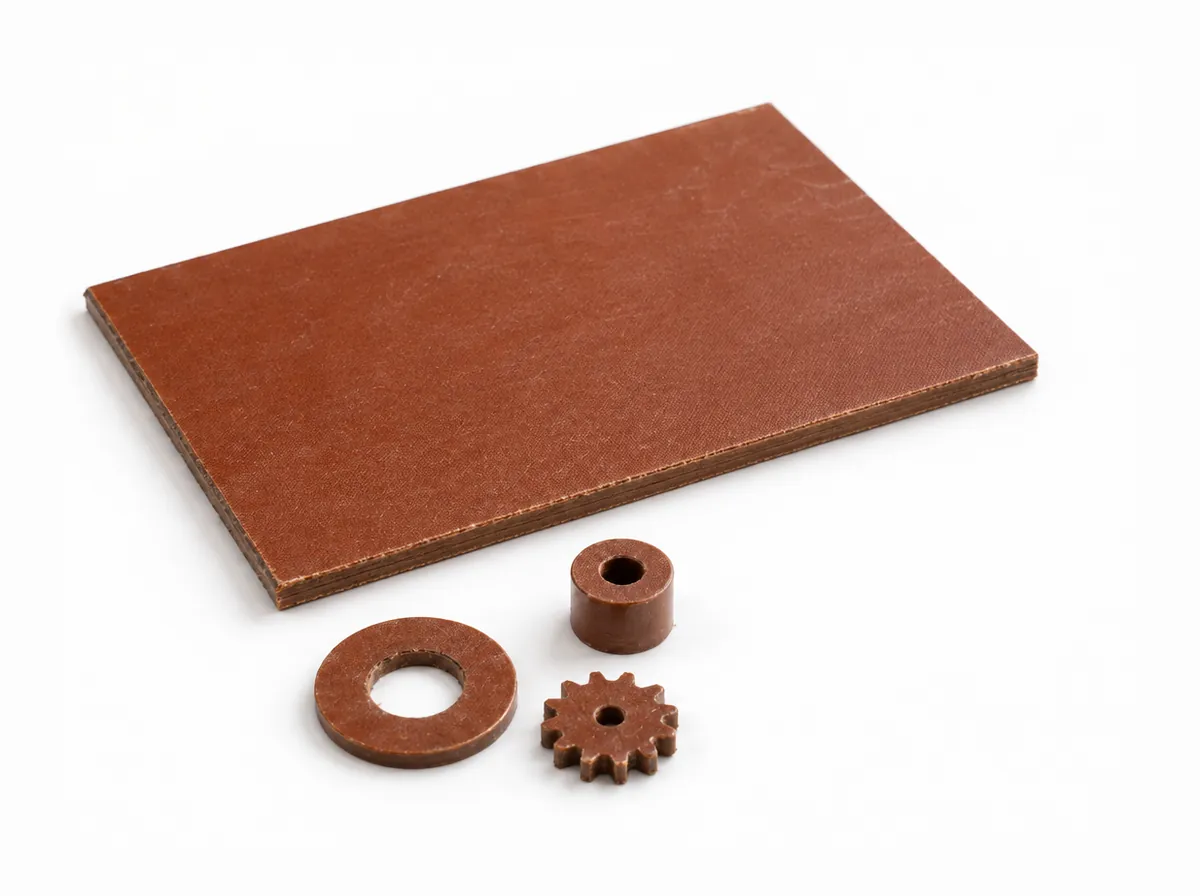
Pertinax
Phenolic resin paper laminate
Thermoset material made of paper laminate and phenolic resin, excellent electrical insulation up to approx. +120 °C.
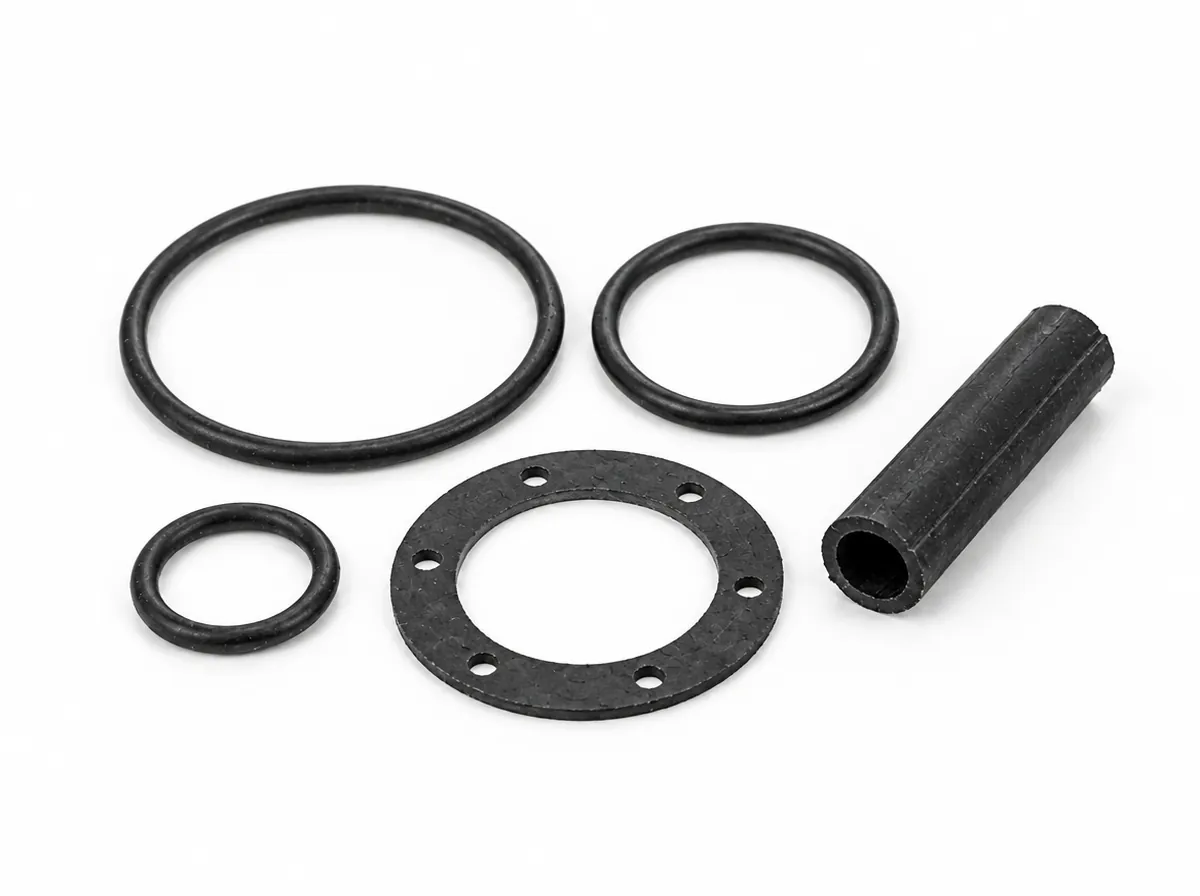
Aramid fibre
High-pressure sealing material
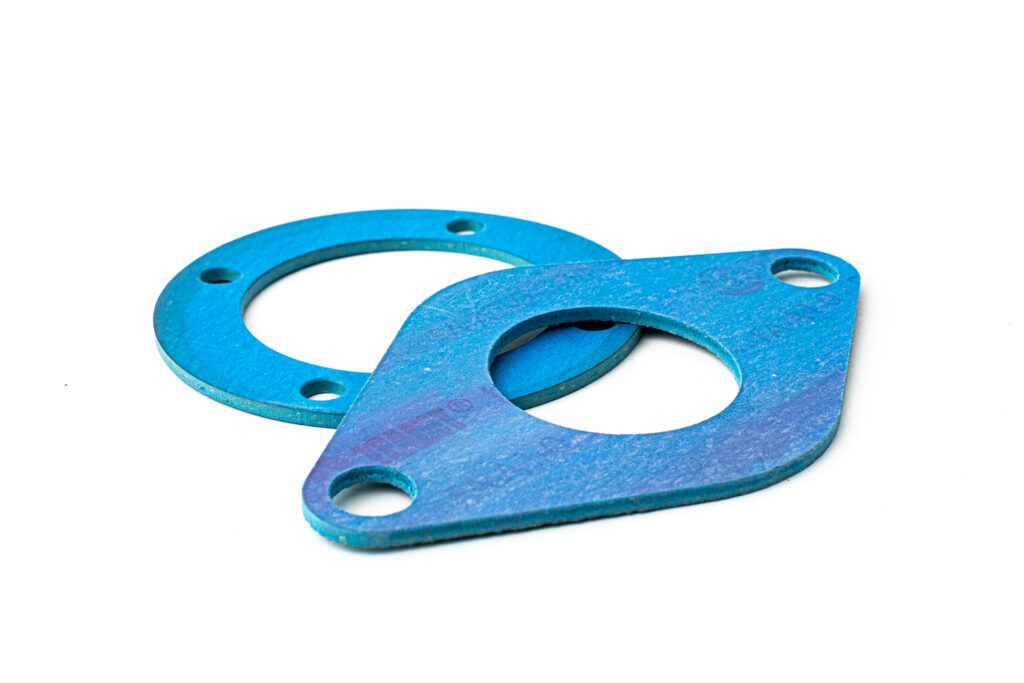
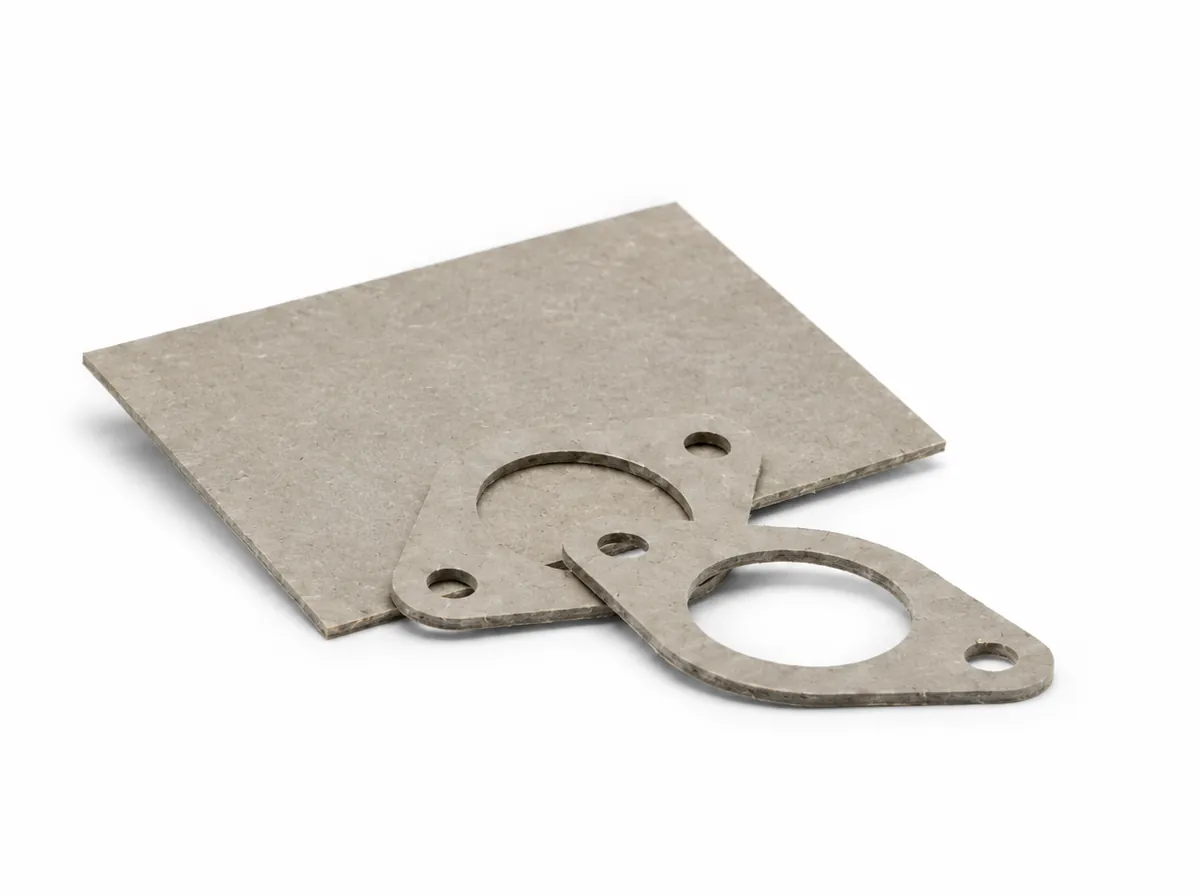
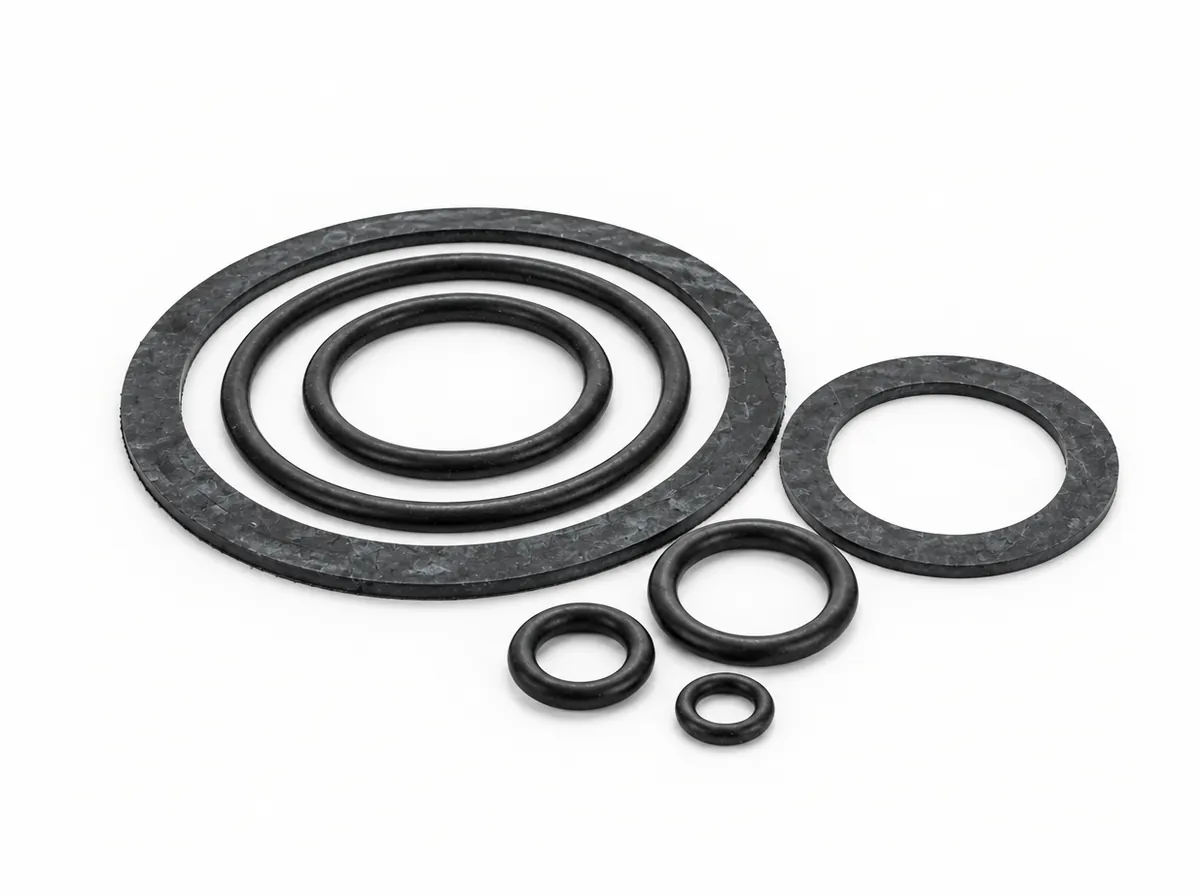
Fibre-reinforced gasket sheets for very high temperatures and pressure ranges, e.g. for flange seals with steam, hot water, oil and gas. Also high-pressure sealing material from well-known manufacturers such as Frenzelit, Hecker, Tesnit and others.
Abil N
Cellulose fibre sealing material
Cellulose fibre gasket sheets with NBR binder, oil and fuel resistant, compressible, -30 to +120 °C.
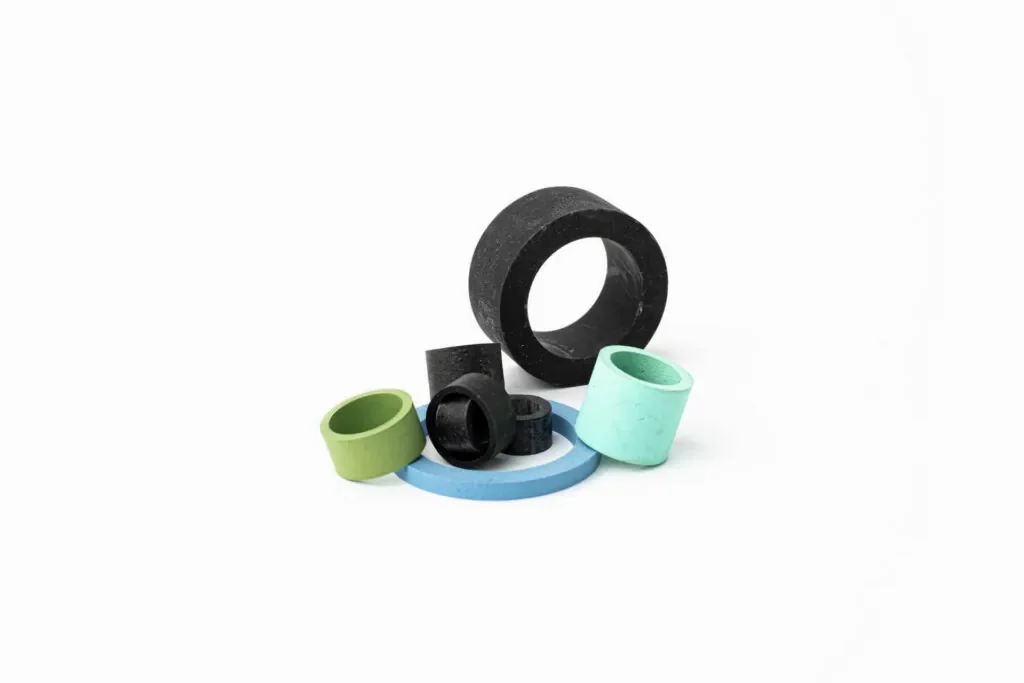
On request, sheet material and compounds are also available in the RAL colours customary in elastomer processing.
Configurator
Find the right material
Select the operating temperature, media and required approvals, and the material recommendation updates live. Add your contact details and send the enquiry together with your selection.
Temperature resistance
Continuous temperature ranges
As a rule, all grades are sulphur-cured. On request, we also supply EPDM and NBR peroxide-cured and silicone platinum-cured, with correspondingly higher resistance at elevated temperatures.
| Abbreviation | Elastomer | Continuous temperature range |
|---|---|---|
| NR / NK | Natural rubber | -30 °C to +80 °C |
| SBR | Styrene-butadiene rubber | -30 °C to +100 °C |
| NBR | Nitrile rubber | -30 °C to +100 °C |
| H-NBR | Hydrogenated nitrile rubber | -40 °C to +150 °C |
| EPDM | Ethylene propylene diene monomer | -30 °C to +140 °C |
| CR | Chloroprene / neoprene | -40 °C to +100 °C |
| ACM | Acrylate rubber | -30 °C to +170 °C |
| AEM | Ethylene acrylate rubber | -40 °C to +170 °C |
| FKM / FPM | Fluororubber | -20 °C to +220 °C |
| FFKM | Perfluororubber | -15 °C to +320 °C |
| VMQ | Silicone rubber | -50 °C to +200 °C |
Standards & approvals
Available with the right approval on request
Approvals
Automotive factory standards
All products are REACH and RoHS compliant. IMDS data and technical data sheets are available on request.
Knowledge
Related technical articles
Which Materials Are Suitable for Heat-Resistant Flat Seals?
Heat-resistant flat seals are used in a wide range of industries, including chemicals, oil and gas, automotive and heavy industry. They are essential for ensuring the tightness, safety, efficiency and service life of systems operated under extreme thermal loads. But which materials are suitable for such applications? In this article, we look at the properties and possible uses of materials such as graphite, PTFE (polytetrafluoroethylene) and metal-reinforced seals. With this analysis, you can make the best choice of material for your specific requirements.
Read moreDifferences Between Graphite and EPDM Flat Seals
Flat seals play a central role in sealing technology, as they are used in a wide variety of industries and installation situations. Two of the most different materials for flat seals are graphite and EPDM (ethylene propylene diene rubber). Both materials have specific properties that predestine them for different applications. In this article, we look at the chemical, mechanical and thermal differences to help you make an informed decision.
Read moreWhy EPDM Flat Seals Are Suitable for Sanitary Applications
EPDM (ethylene propylene diene monomer) has established itself as an outstanding material for flat seals in sanitary applications. With its combination of chemical resistance, thermal stability and flexibility, it meets the high requirements of this industry. In this article, we examine the technical properties of EPDM and show why it is predestined for use in sanitary installations.
Read moreHow to Find the Right Flat Seal for Your Application
Choosing the right flat seal is crucial for tightness and therefore also for the safety, efficiency and service life of machines, plants and systems. Whether in the chemical industry, mechanical engineering or sanitary technology, the requirements placed on seals vary widely. In this guide, we show you how to find the optimum flat seal for your specific application.
Read moreWhich Standards Must Flat Seals Meet?
Flat seals play a crucial role in many industries, including chemicals, petrochemicals, mechanical engineering and sanitary technology. To ensure safety, durability and performance, these seals must comply with strict norms and standards. In this article, we look at the most important standards, their significance and technical details, so that flat seals meet the requirements of their applications.
Read moreWorking together
Unsure which material to choose?
Tell us the medium, temperature, standard and application, and we will recommend the right material and send technical data sheets on request.